
Time on the Work

Time on the Work

The clearest sign of progress

Research shows that time spent doing the hard work of math practice is the single best indicator of a student's progress.

Tutors Keep Students on Task

The role of a tutor is partly to explain, but mainly to keep each student focused and on task. Attention drifts easily, and a good tutor pulls it back to the work.

That steady focus is what turns session time into real progress, because time genuinely spent working is what moves a student forward.

Tutors Keep Students on Task
Most Time Spent Working

Most Time Spent Working

We spend the majority of every session with students actually working on real problems, not listening to long explanations.

Explanation happens when it helps, but the bulk of the time is hands-on practice, because that is where progress actually comes from.

Study Time Increases Mathematical Achievement Scores

Spitzer (2021)
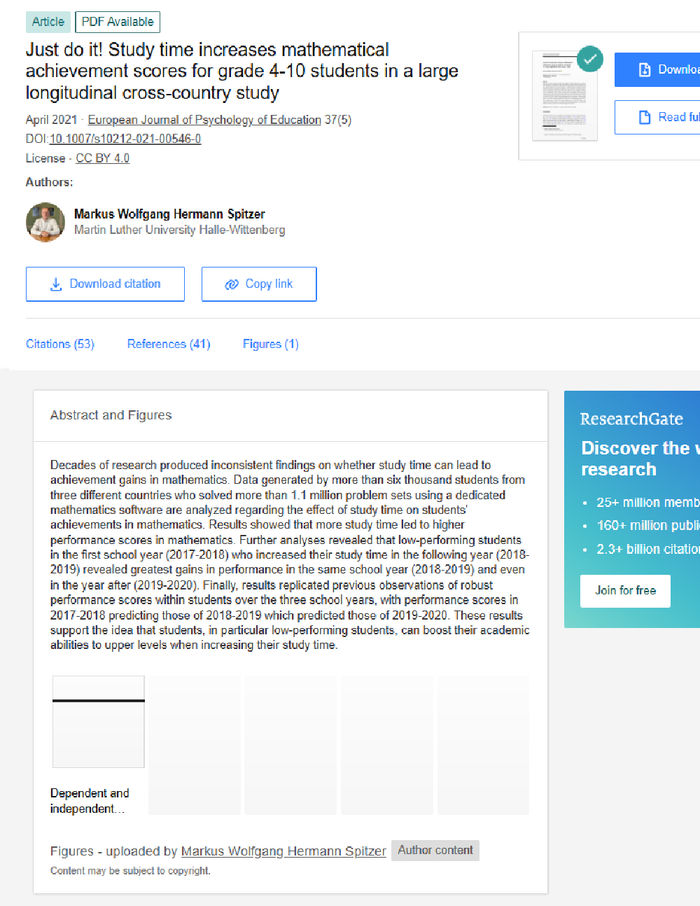
Kids who regularly spend time practicing math tend to do better in math over time.
First page of Study Time Increases Mathematical Achievement Scores

This study tracked how much time students spent studying math and how they performed, and found a clear link: more time actively spent on math practice went hand in hand with higher achievement. It is a reassuring, common-sense result — the children who consistently put in the practice time are the ones who make measurable gains, which is why keeping students focused and on task matters so much.

Read the research (2021)

Instructional Time and Student Achievement Synthesis

Kraft et al. (2024)
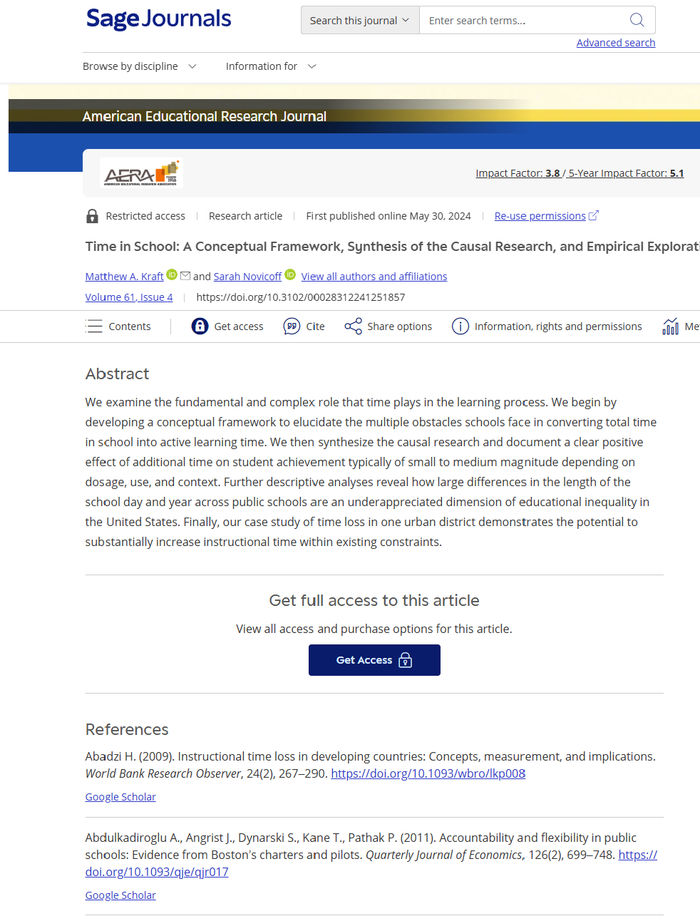
The more time students spend meaningfully working on math, the more they tend to improve.
First page of Instructional Time and Student Achievement Synthesis

This synthesis of many studies asked a focused question: does adding more engaged learning time actually help? The answer was yes — especially when that extra time is well-structured and students are genuinely working, not just present. The quality of the time matters as much as the quantity, which is why sessions that keep students actively engaged on real problems produce the biggest gains.

Read the research (2024)

Frequently Asked Questions

Start by grade for quick alignment, by topic for targeted reinforcement, or with skill leveling when placement is unclear. Choose the route that reduces confusion fastest.

It provides a practical readiness estimate to guide placement decisions. It is a low-pressure planning tool, not a high-stakes judgment of student potential.

Yes. Topic pathways can review prerequisites or extend challenge beyond current grade, which helps students progress based on readiness instead of fixed labels.

Use worksheets in short, consistent cycles with immediate review and reflection. Pairing worksheets with interactive practice helps reinforce understanding and reduce repeated error patterns.

Some practice experiences can start immediately, while account setup unlocks progress tracking, personalized pathways, and clearer long-term continuity across sessions.

Progress views show completion consistency, concept trends, and likely challenge areas. Families can use those patterns to choose practical next steps with less guesswork.

Practice can be a strong foundation. Tutoring becomes useful when bottlenecks persist, confidence drops, or goals require faster progress and guided accountability.

Consistent short sessions usually outperform occasional long sessions. Sustainable weekly routines improve retention, confidence, and follow-through better than irregular intensity.

Yes. Advanced learners can use topic pathways and higher-challenge sets to deepen reasoning and avoid plateauing while staying connected to long-term growth.

Parents can support consistency, review trends, and help maintain calm routines. They do not need to reteach math content for progress to improve.