Anchor With A Visual Pattern
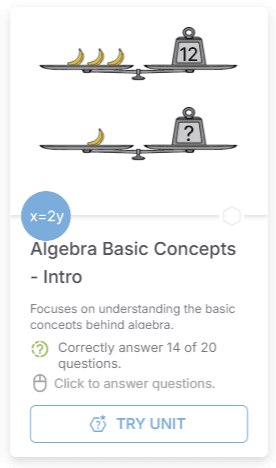
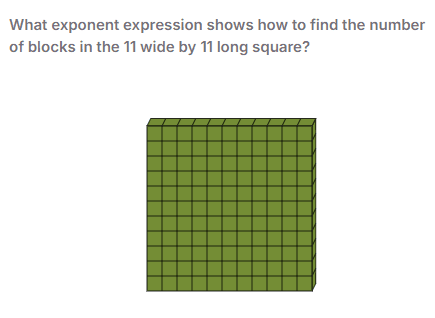
The first prompt grounds the concept in a visible repeated structure so the rule has a clear meaning.

Matarus identifies prerequisite gaps, strengthens core skills, and helps students take on multi-step math with greater independence.
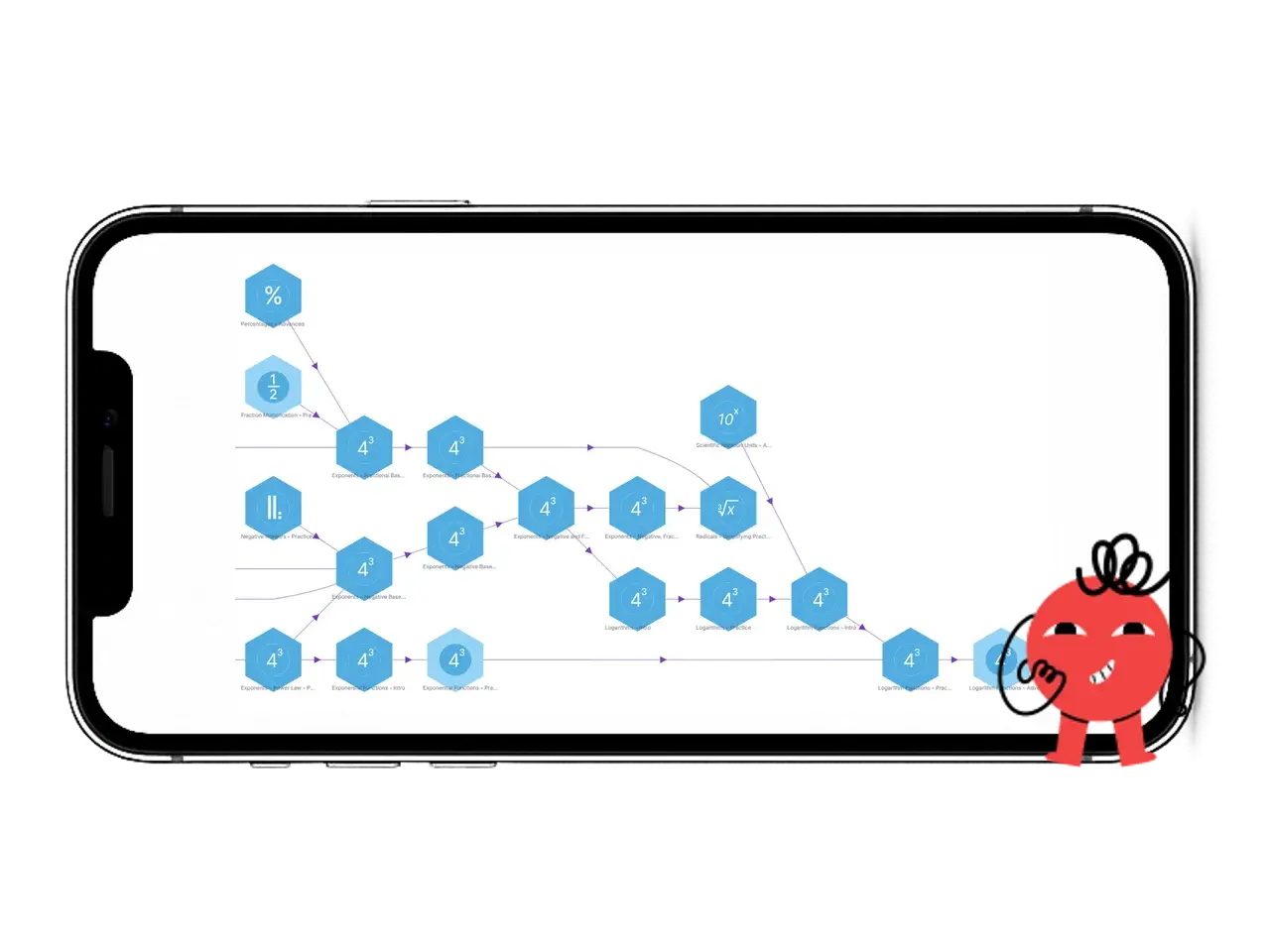
As foundations become stronger, Matarus introduces more demanding work in a measured sequence. Students move from repairing prerequisite skills to connecting ideas across algebra, geometry, functions, and multi-step problems.
The platform raises the level when the student is ready, while tutors guide the work and help students stay engaged with each new challenge. Over time, students build the independence to approach unfamiliar high-school math with a plan.
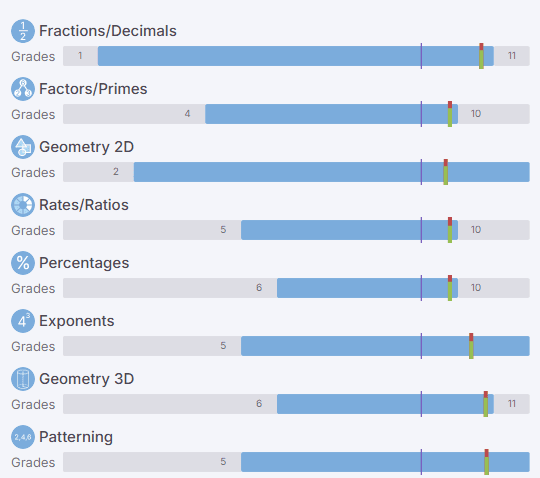
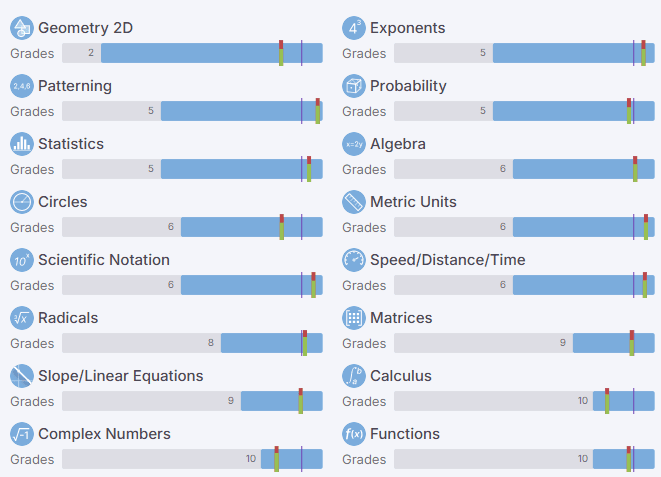
Students may strengthen ratios, expressions, equations, geometry, functions, and data skills. These ideas appear across grades 7–9 coursework and give students a steadier base for algebra and other high school math.
Students learn to connect those domains to real classwork: reading a graph before writing an equation, using proportional reasoning in geometry, or linking data displays to measures of center. Those connections make current lessons clearer and help familiar ideas carry into later algebra, geometry, functions, and data work.

Grades 7-9 success depends on seeing how major ideas connect. Tutors help students strengthen the core domains that keep showing up in school math: ratios, expressions, equations, geometry, functions, and data. As those links get clearer, students can follow multi-step reasoning, move between representations, and use one idea inside another. The goal is math that holds together and keeps helping in future units.
Students model relationships with equations and graphs, then.
Algebraic Expressions and Equations
Students simplify expressions, solve equations, and translate word.
Exponents and Scientific Notation
Learners apply exponent rules and scientific notation in.
Ratios, Rates, and Percent Relationships
Students solve proportional reasoning problems involving rates, percentages,.
Pythagorean Theorem and Geometric Reasoning
Students apply geometric reasoning and the Pythagorean theorem.
Students analyze data, calculate probabilities, and interpret statistical.
Functions and Pattern Relationships
Learners study function relationships through tables, rules, and.
Students simplify radicals and square roots, then use.
Featured Skill
Students model relationships with equations and graphs, then.
Sample preview unavailable for this skill.
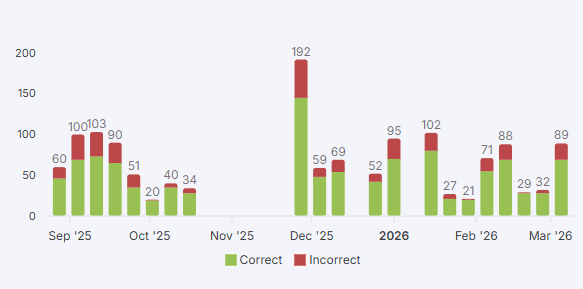
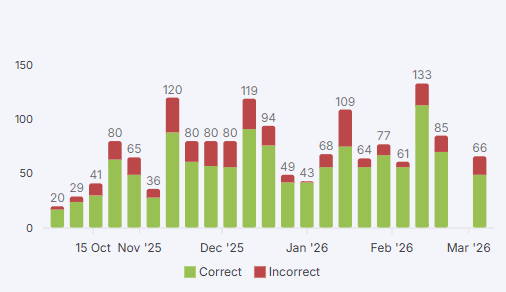
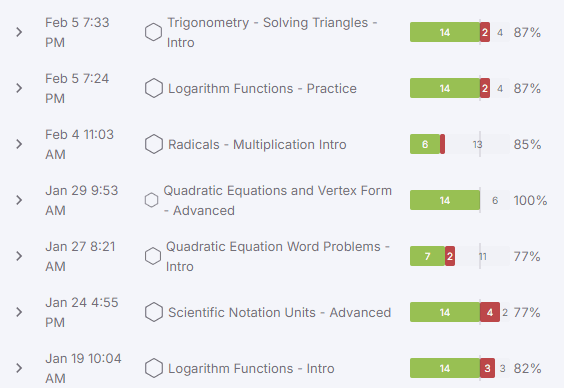
Families and students can see progress taking shape as students explain their thinking, respond to focused feedback, and try related questions again. Each successful retry gives students clearer evidence of what they can do and where they are ready to stretch.
Over time, visible progress can turn uncertainty into confidence. Families can follow skills becoming steadier, while students learn that a difficult question is a place to think, adjust, and keep going.
Weekly spiral review brings earlier skills back after time has passed. Students revisit important ideas such as ratios, equations, geometry, and functions instead of relying on one successful practice session.
Spacing shows whether a skill is still available when the original lesson is no longer fresh. Matarus gradually increases complexity as students retain more, giving them time to build durable understanding without rushing ahead.
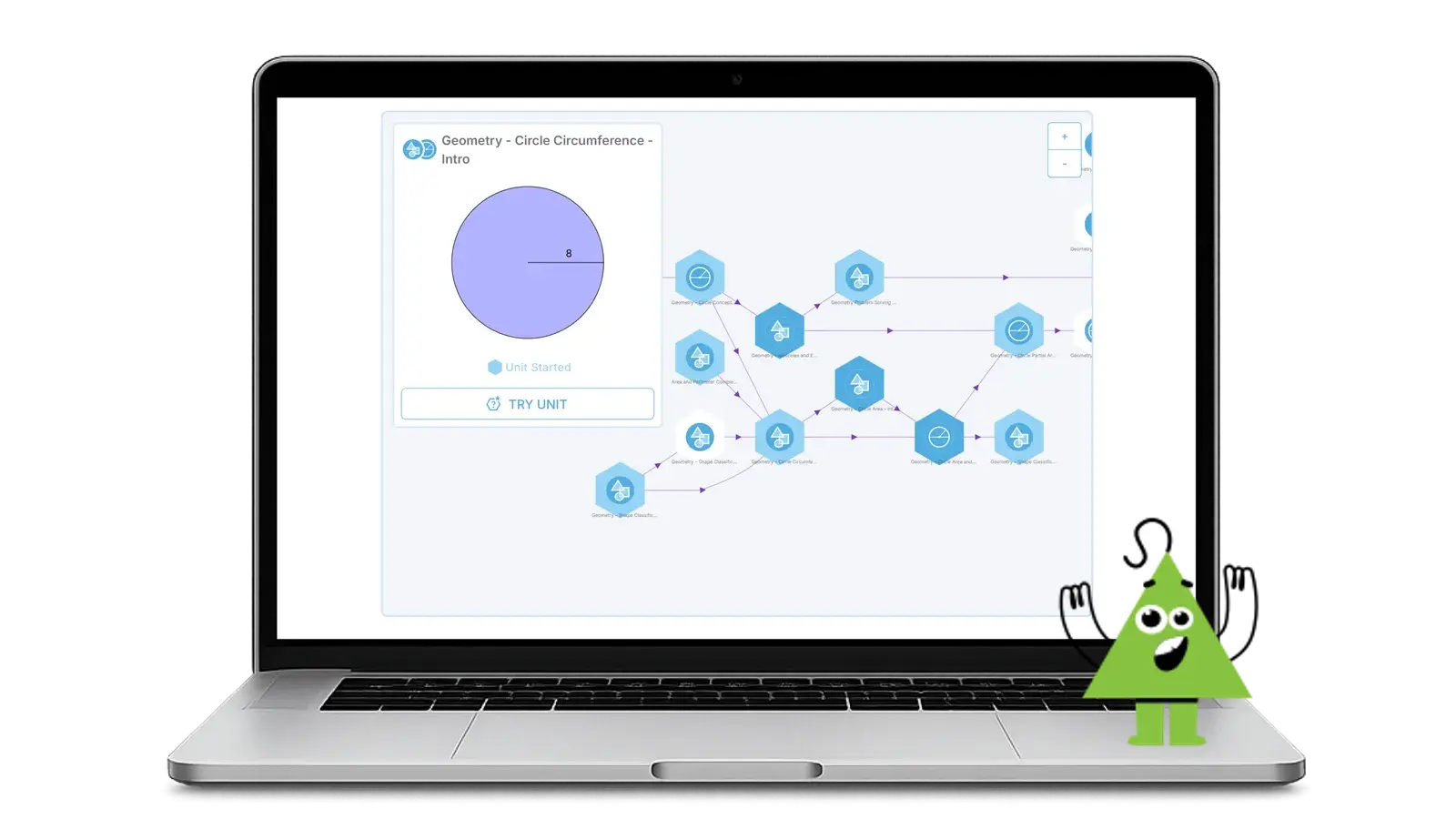

Mixed-topic work asks students to plan before they calculate. They identify the information given, decide which representation or operation might help, and explain why that choice fits the question.
Students then check whether their approach is working. If the result does not make sense, they learn to revisit the information, test another route, and adjust their plan instead of guessing or following a familiar pattern automatically.
Support changes as the student becomes ready. A tutor may first model an approach, then ask the student to choose the next step, and later ask the student to outline a complete plan before beginning.
The platform helps show when a foundation is secure and when more practice is needed. Tutors use that information to fade guidance at the right time, so students take ownership of the work without being pushed past what they understand.
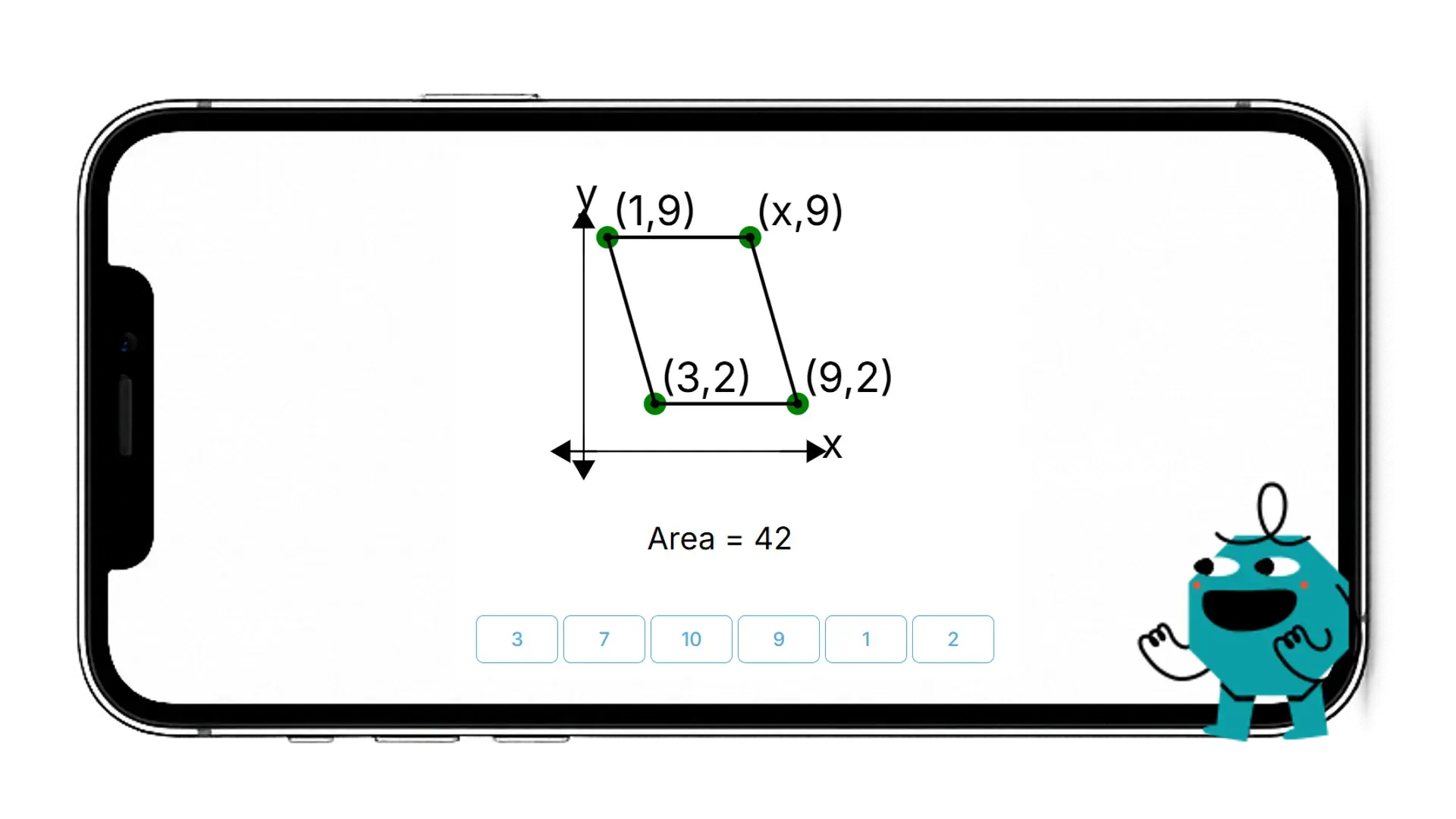
Grades 7-9 example
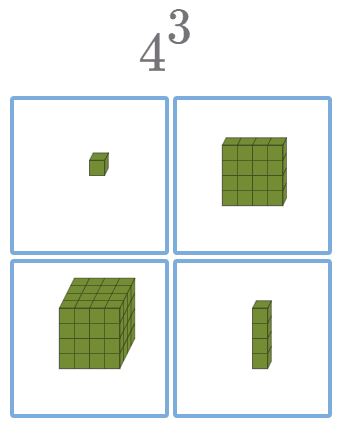
Even advanced topics improve when learners move through a controlled sequence: concrete pattern, formal notation, worked expansion, and abstract application.
The first prompt grounds the concept in a visible repeated structure so the rule has a clear meaning.
Students translate the visual structure into compact notation while the connection is still explicit.
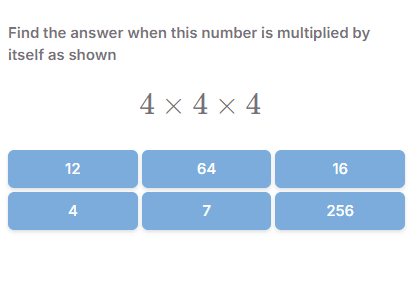
The middle step asks for a correct expansion and computation so the learner rehearses the rule without losing the underlying pattern.
The final step shifts into algebraic notation, checking whether the student can generalize the same reasoning to symbols.
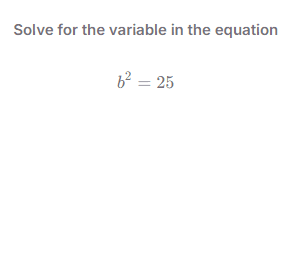
Grades 7–9 math asks students to recognize when an earlier idea can help with a new problem. They may connect a table to a graph, use an equation to describe a relationship, or choose a geometric fact that fits a multi-step situation.
Students also learn to check their own work for missing information or an unexplained step. That habit helps them notice gaps, make better choices, and transfer what they know instead of waiting for every problem to look familiar.

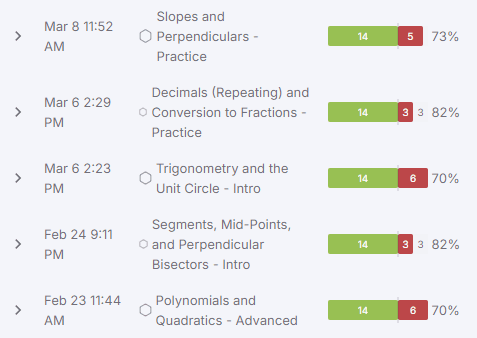
Families receive concise weekly updates showing which skills improved, where support is still needed, and what focus should guide the next week of learning.
These updates give parents practical evidence they can understand quickly. They can see whether a student is retaining earlier work, decide where reinforcement may help, and follow progress toward stronger high-school readiness.
Book a short evaluation call to review your child's current level, goals, and schedule. We can help you choose the best-fit format: private math tutoring, small-group tutoring, or a blended plan that shifts between formats as goals, readiness, and schedules change. We also explain how Matarus makes progress visible with regular updates on covered skills, current strengths, and what to prioritize next.