Steady Math Progress
How tutors vary challenge
See how Matarus tutors use leveling, Unit Mastery, Practice, SpeedSet, games, and competition problems to keep students engaged and learning at the right level.
Start with Leveling
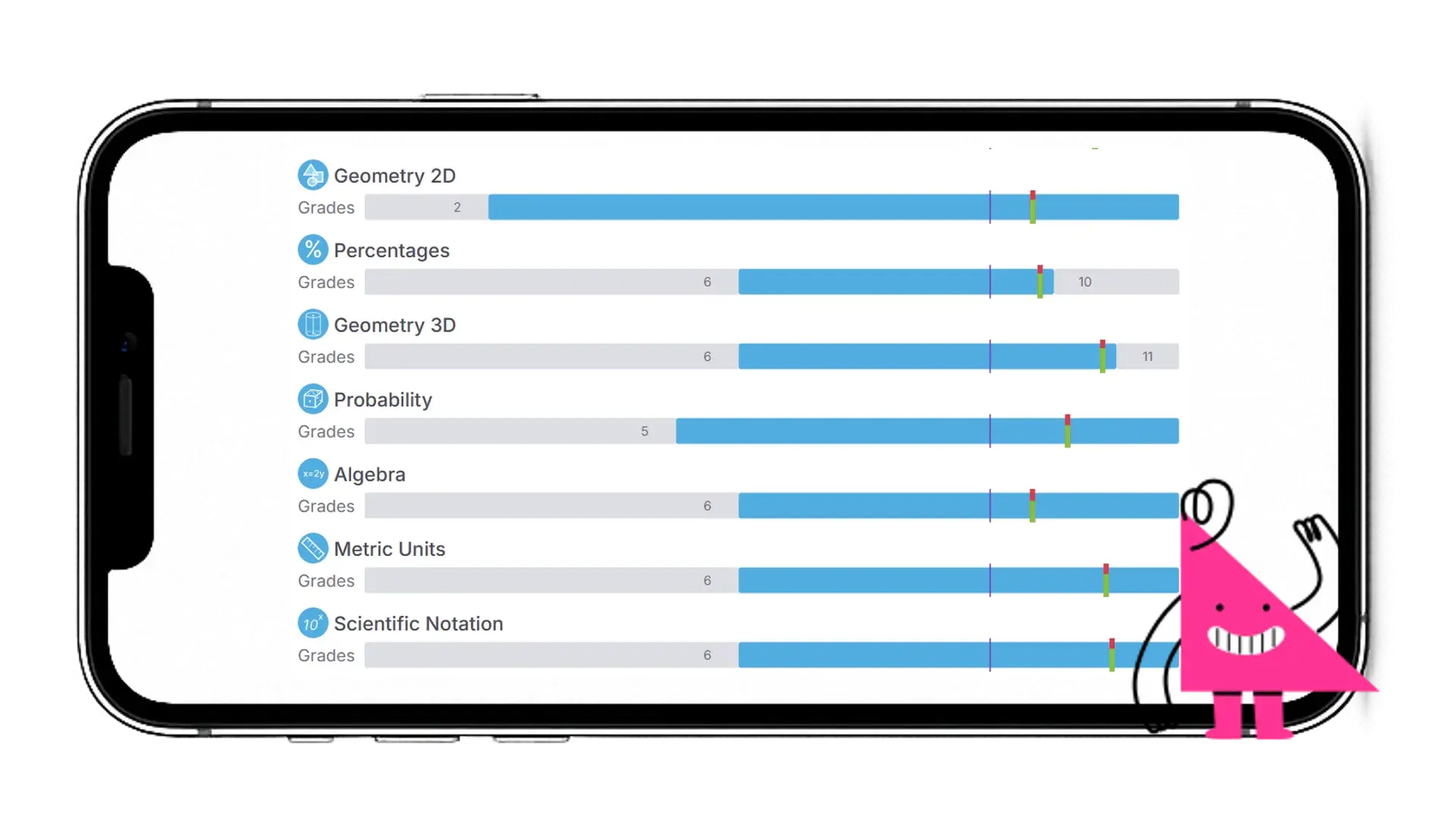
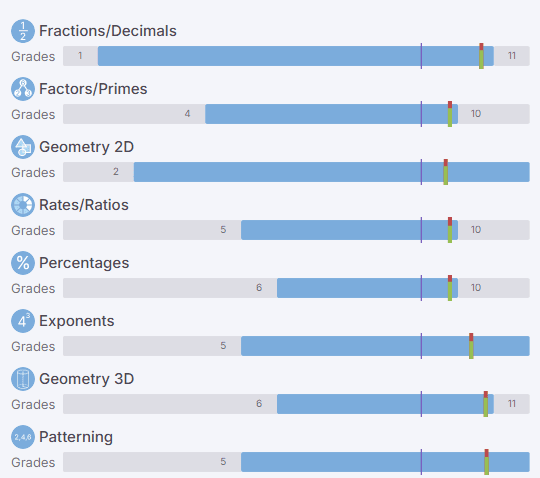
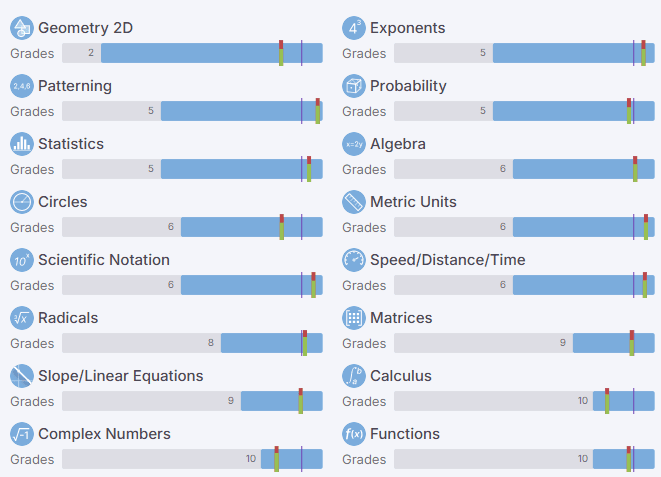
Good class pacing starts with knowing where a student is across a math theme. Leveling helps tutors see that starting point clearly.
With that baseline in view, the lesson can begin at a level that makes sense for the student instead of feeling too easy or too hard.
Different Tools, Different Jobs
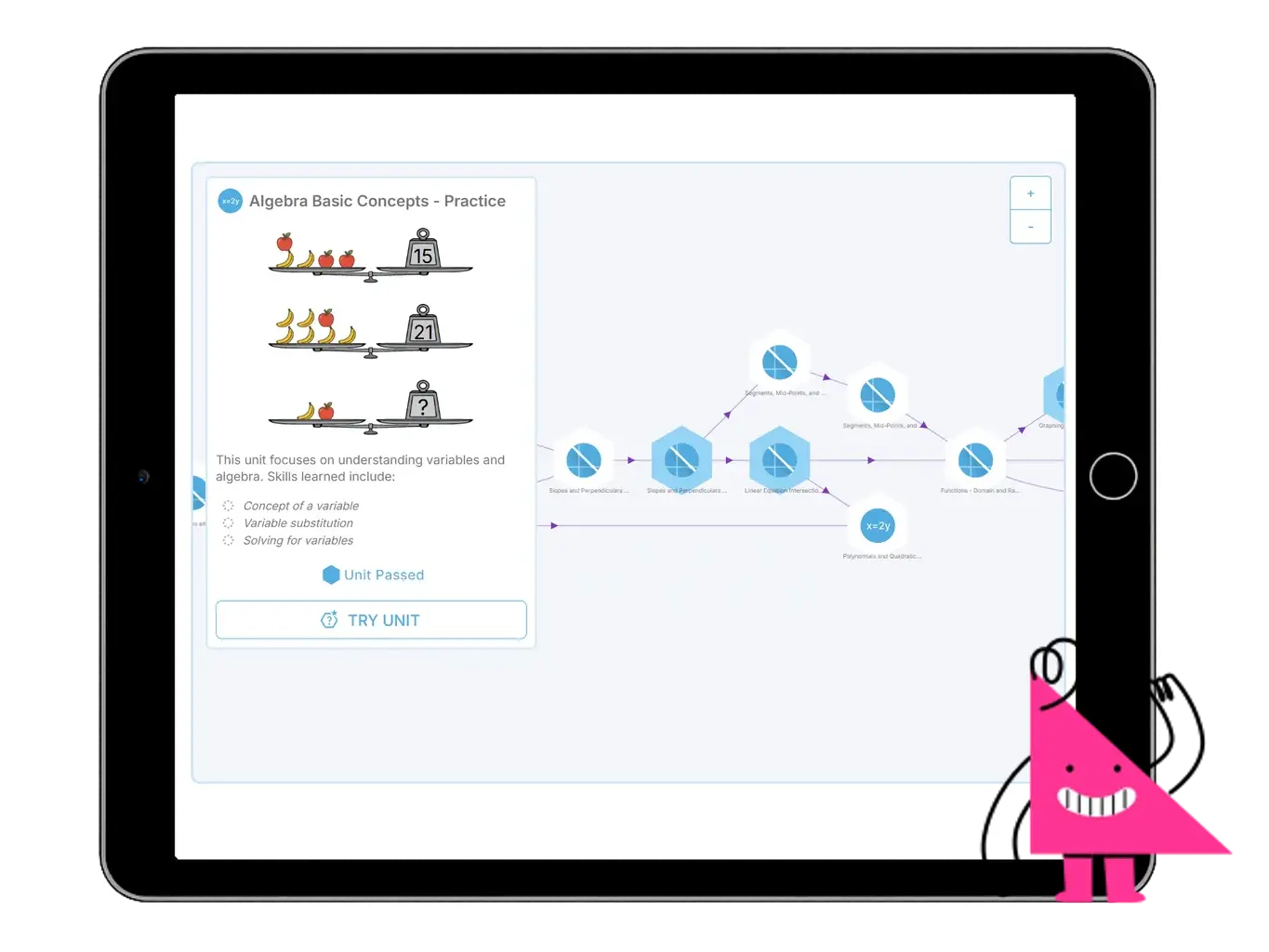
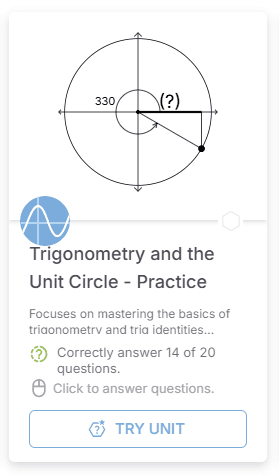
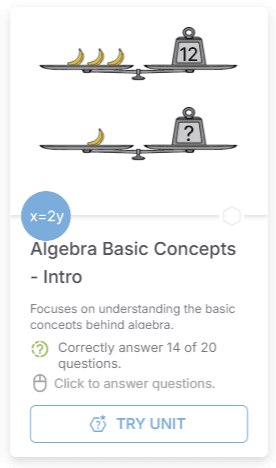
Unit Mastery helps students work through core ideas in a focused way. Practice gives them more chances to apply what they know and strengthen consistency.
SpeedSet helps build faster recall of key facts and patterns. Together, these activities give tutors different ways to vary challenge while keeping learning productive.
A Better Activity Mix
Class pacing keeps students interested through the right mix of math challenges and activities.
That mix can include leveling, Unit Mastery, Practice, SpeedSet, games, and competition problems, with each part helping the lesson stay productive in a different way.


Progress Families Can See
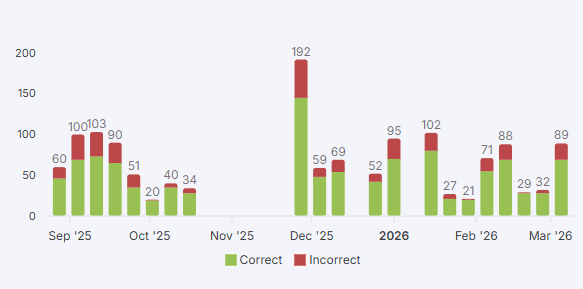
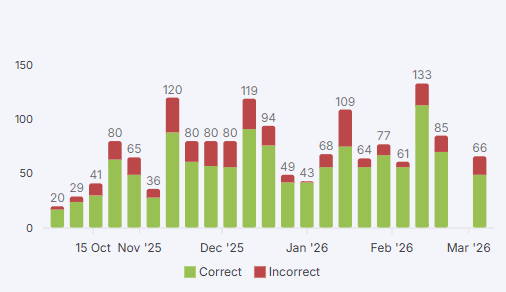
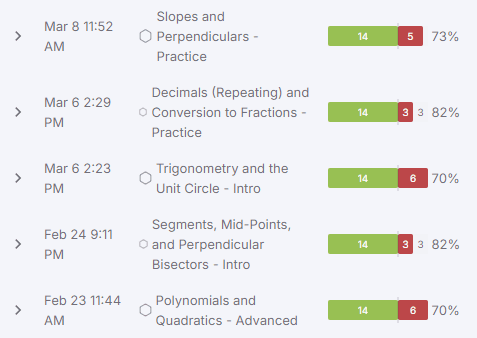
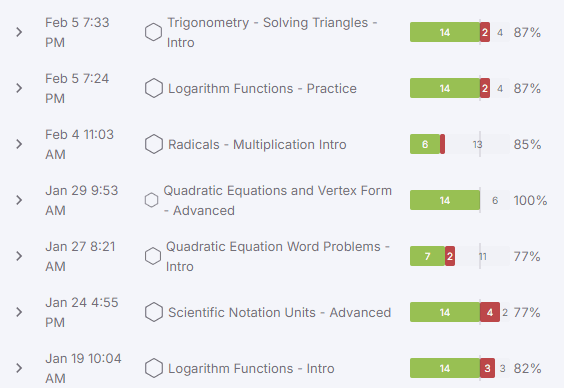
Good pacing should lead to visible progress, not just a busy lesson. Families should be able to see when a student is building confidence, handling stronger work, or needing more support in a specific area.
That kind of visibility makes pacing feel credible. It shows whether the lesson is helping the student keep moving forward at the right level.
Loved by parents and students alike
When to Go Deeper
Not every part of a lesson should feel the same. As students settle into the work, tutors can use deeper problems to add creative problem-solving and stretch mathematical thinking.
Competition math is one way to add that depth. Games can also help, especially for younger students, but they work best as a light touch inside a broader lesson plan rather than the whole session.

Visible Weekly Progress
Families receive concise weekly updates that show what improved, where support is still needed, and which next focus area should guide the coming week of learning.
That gives parents practical learning evidence they can understand quickly, so decisions about pacing, reinforcement, and goals stay grounded in what the student is actually showing.


Confident, Steady Progress
Good pacing helps a lesson feel challenging without becoming frustrating. Students spend less time stuck in work that is too hard or bored by work that is too easy.
At Matarus, tutors use pacing to protect momentum. The goal is not to rush through activities. It is to keep each student working at a level that builds confidence, attention, and real mathematical growth.