Stronger Entrance-Test Readiness
How tutors use Matarus
Use Matarus to assess baseline skills, assign targeted practice, and prepare students for university entrance-test math.
What Test Prep Needs
University entrance-test math depends on secure fundamentals, steady speed, and the confidence to work carefully under pressure.
Matarus helps tutors build that preparation with focused curriculum, targeted practice, and test-style questions that match the student's current level and support stronger exam readiness over time.

Establish the Baseline
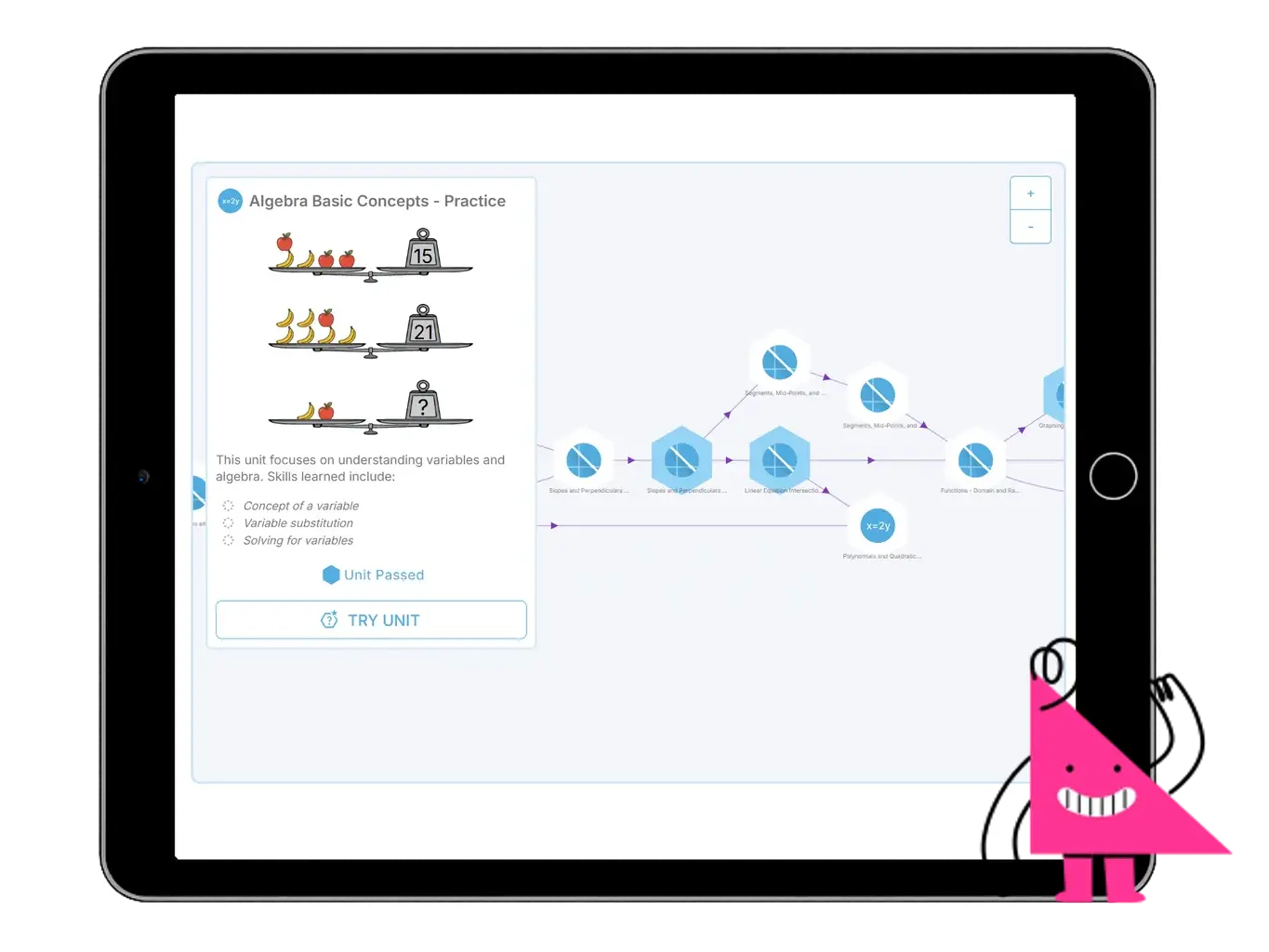
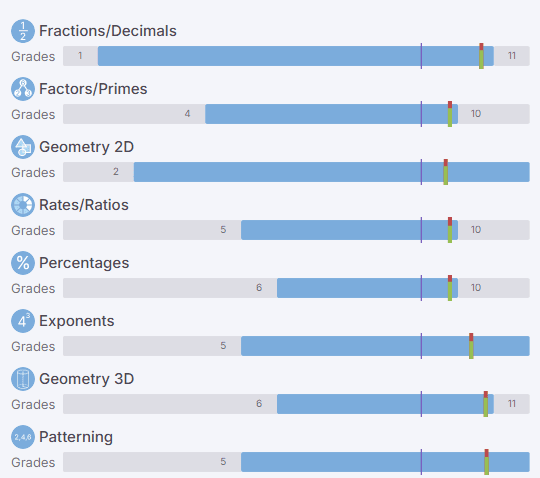
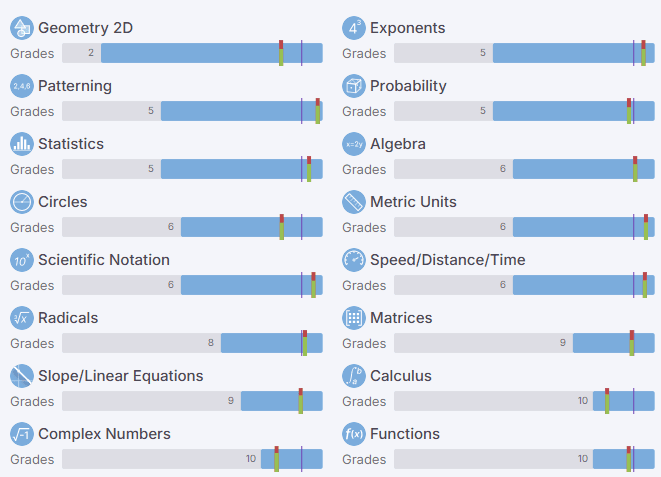
Entrance-test prep starts with a clear picture of the student's baseline across core areas such as algebra, geometry, exponents, and probability.
That early view helps tutors choose the right Matarus curriculum and practice types, so preparation begins with the skills the student most needs for stronger test readiness.
Loved by parents and students alike
Build Depth with Unit Mastery
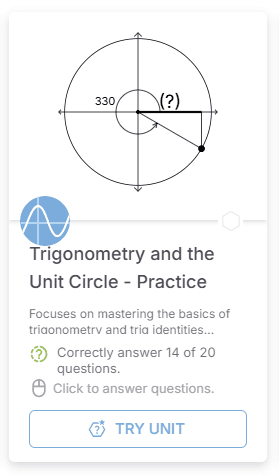
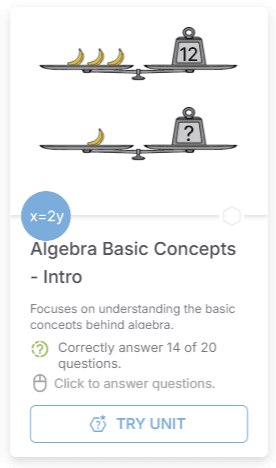
After leveling shows where support is needed, tutors can use Unit Mastery to build depth in the skill areas that matter most for entrance-test math.
These exercises give students concentrated practice in key skills, helping tutors strengthen weak areas before adding more test-style pressure.

Practice by Priority
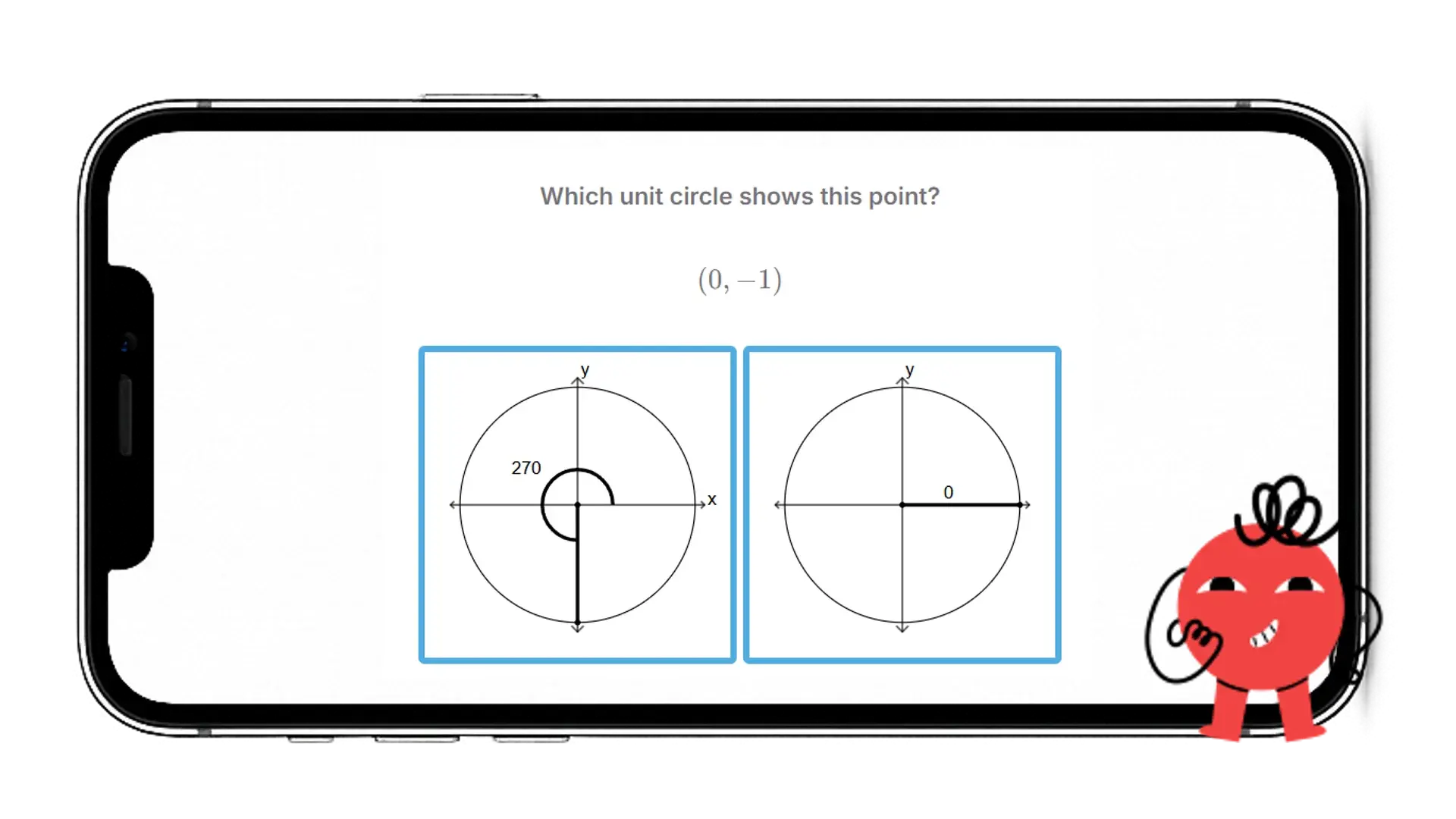
Matarus helps tutors choose practice types that match what entrance-test prep actually needs most right now.
That might mean targeted work on algebra, geometry, exponents, or probability, along with practice that builds speed, accuracy, and better habits for checking solutions under test pressure.
Confidence Under Pressure
Confidence matters in entrance-test math, but it grows from preparation that students can feel. When students know the format, trust their foundations, and have better habits for checking work, they approach the test with more control.
Matarus helps tutors build that confidence through repeated practice, visible progress, and test-style questions. Students get more chances to apply what they know, check solutions carefully, and feel ready for the pace and challenge of the exam.

Beyond Test Prep
Some students reach a point where entrance-test preparation is no longer the main need. Once their readiness is clear, tutors can recommend competition math as a stronger next step than simply extending exam practice.
Competition math deepens reasoning and gives strong students a wider use for math than test performance alone. Matarus helps tutors explain when that shift makes sense and how it supports bigger academic goals.

Skills That Last
A strong entrance-test path starts with secure arithmetic and algebra, then builds through geometry, functions, and problem solving in the secondary years. Matarus helps tutors connect that long-range development to present entrance-test prep choices, so students prepare on top of real mathematical strength rather than short-term cramming. Over time, that can mean faster work, fewer avoidable errors, and greater confidence on test day.

- Grades 1-3Build a passion for math and enjoy the challenge.
- Grades 4-6Build confidence and establish identity as a math person.
- CompetitionsBuild creative problem-solving skills and confidence to tackle hard problems.
- Grades 7-9Develop the key skills that high-school math depends on.
- High SchoolAce the hardest high school math programs.
- SAT / ACTMaster the skills needed to ace the entrance tests.
- STEM FuturesCollege and university STEM programs
Visible Weekly Progress
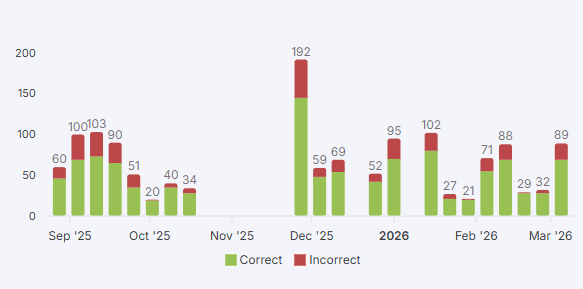
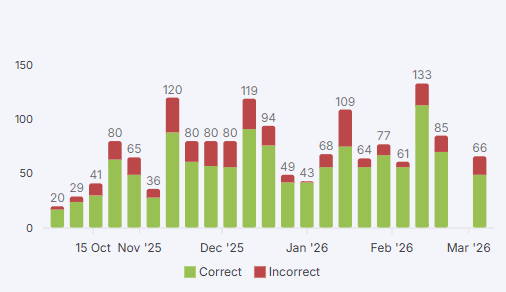
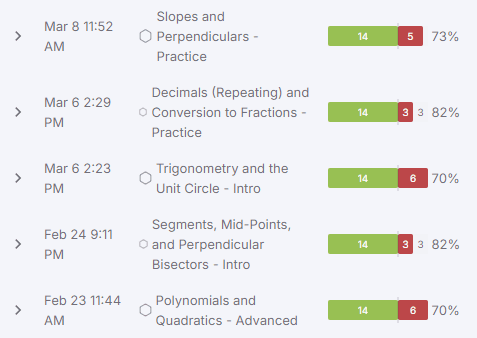
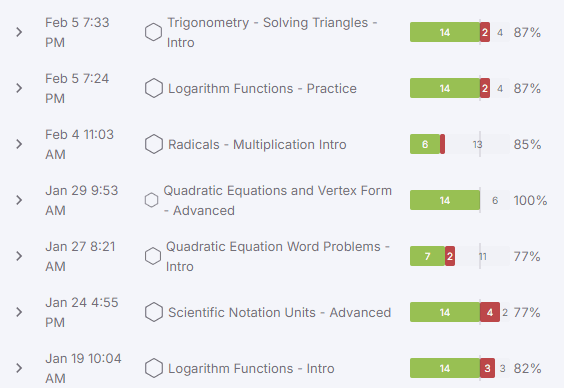
Families receive concise weekly updates that show what improved, where support is still needed, and which next focus area should guide the coming week of learning.
That gives parents practical learning evidence they can understand quickly, so decisions about pacing, reinforcement, and goals stay grounded in what the student is actually showing.


A Better Prep Conversation
Strong entrance-test tutoring is not only about assigning harder questions.
The most useful conversations help families understand which skills are secure, where speed or accuracy still breaks down, and what kind of practice should come next. Matarus gives tutors a clearer way to explain whether the next step is skill repair, speed work, accuracy work, or test-style practice.