All Grades
Focuses on basic addition and subtraction, number recognition up to 100, understanding place value, and solving simple word problems. Introduces concepts of time and money, and explores basic shapes and measurements to build a strong numerical foundation.
11 groups- See 38 Skills
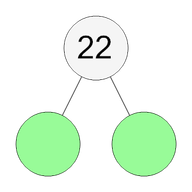
Students add and subtract whole numbers within 20 by modeling joining, separating, comparing, and finding missing parts, using counting on or back, making ten, doubles, near doubles, number bonds, and fact families. They interpret and write addition and subtraction equations, including the plus, minus, and equals signs, and solve one- and two-step word problems with unknowns in any position. They also add one-digit numbers to multiples of ten and add or subtract two-digit numbers without regrouping, using place-value reasoning within 100.
- See 13 Skills
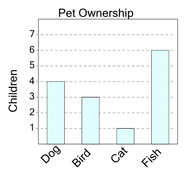
Ask simple questions about one attribute, sort objects into categories, collect categorical data, and record counts using tally marks or simple tables. Create and interpret one-to-one pictographs and simple bar graphs with small whole-number counts, identifying the most and least common categories and comparing two categories as more, fewer, the same, or how many more or fewer. List possible outcomes, conduct simple chance experiments, record results, and describe events as certain, possible, impossible, likely, or unlikely using informal language.
- See 15 Skills
Students recognize, create, draw, and organize small equal groups, distinguishing the number of groups, the number in each group, and the total, including simple rows-and-columns arrays. They count equal groups by ones, twos, fives, and tens, with groups of five and ten typically supporting totals through 100, and represent groups through skip-counting, counting on, and informal repeated addition. They solve simple equal-group and equal-sharing situations, including sharing between two groups and identifying a possible leftover, without formal multiplication or division notation, algorithms, or generalized rules.
- See 15 Skills
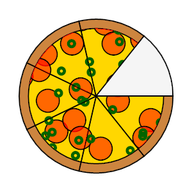
Recognize a whole and identify, name, and represent halves and fourths as equal parts of shapes, lengths, objects, or collections. Partition and share wholes into two or four equal parts, identify missing parts, and understand that two halves or four fourths compose one whole. Compare halves and fourths, recognizing that one half is larger than one fourth and that two fourths equal one half.
- See 18 Skills
Identify, name, describe, and sort circles, triangles, squares, rectangles, hexagons, and other familiar two-dimensional shapes by their straight or curved sides, vertices, and defining attributes, regardless of size or orientation, and recognize open and closed figures and simple symmetry. Identify and compare cubes, rectangular prisms, cylinders, cones, and spheres by their flat or curved surfaces, faces, edges, and vertices, including how objects stack or roll. Compose and decompose two- and three-dimensional shapes, including partitioning rectangles into equal squares, recognizing that different arrangements can form the same whole.
- See 15 Skills
Students interpret simple addition and subtraction situations within 20, identify relevant or missing information, choose an operation, create or interpret stories, and represent relationships with objects, drawings, equations, part-part-whole models, ten-frames, and number lines. They compare numbers primarily within 100, justify comparisons, explain and organize solution strategies, check answers and correct addition or subtraction errors using objects, inverse relationships, representations, and reasonable-size estimates, including straightforward two-digit problems within 100 and number-line reasoning from 0 through 120. They make and test simple conjectures, use logical elimination with small whole numbers and familiar shapes, and communicate known quantities, unknowns, relationships, and mathematical reasoning clearly in words and representations.
- See 17 Skills
Students compare and order lengths, heights, capacities, and masses using direct comparison and equal-sized informal units, measure lengths by iterating units without gaps or overlaps, estimate lengths, and measure capacity with equal scoops while recognizing that appearance alone can mislead. Students describe temperatures with hot, warm, cool, and cold; identify morning, afternoon, evening, and night; sequence daily events, compare durations informally, read clocks to the hour and half hour, and use calendars to identify days and dates. Students solve simple measurement stories involving lengths and other measurable quantities by representing totals, differences, and missing parts with addition or subtraction within 20 using the same whole-number unit.
- See 13 Skills
Students identify pennies, nickels, dimes, quarters, and a one-dollar bill and match each with its value: 1, 5, 10, 25, and 100 cents. They count and compose whole-cent amounts using equal groups and simple mixed collections, including pennies, nickels, dimes, and quarters, typically within 100 cents, while recognizing that different combinations can have the same value. They compare money amounts and choose coin combinations for small purchases by using counting, skip-counting, addition, and the symbols >, <, and =.
- See 20 Skills
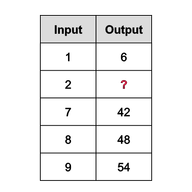
Students recognize equality as a relationship between two equal quantities and solve simple addition and subtraction equations with unknowns in any position using whole numbers and sums or differences within 20. They identify, create, compare, describe, and extend repeating and growing patterns with objects, shapes, colors, sounds, and small numbers, applying simple rules to predict missing or next elements and informally recognize odd-even alternation. They extend and identify number patterns by 1, 2, 5, and 10 within 0–100, use number charts and number lines to describe these relationships, and find or apply simple add-or-subtract input-output rules with familiar whole numbers.
- See 16 Skills
Students describe and compare relative positions using above, below, left, right, beside, between, in front of, behind, inside, and outside, and follow one- and multi-step movement directions from a stated starting point. They read simple picture maps, use keys and spatial language to identify locations, and describe or reverse short paths while recognizing quarter, half, and full turns. Students complete simple shape puzzles and visualize familiar two-dimensional and common solid shapes as composed or decomposed parts, matching shapes after simple rotations or reflections without formal coordinates, measurements, or complex transformations.
- See 27 Skills
Students count, recognize, write, and represent whole-number quantities from 0 through 100, including one-to-one counting of objects, zero, counting forward from any number through 120, and counting backward from 20 or 100 to 0. They compose, decompose, and identify two-digit numbers through 99 as tens and ones, understand that ten ones make one ten, and count by 2s, 5s, and 10s through 100. They compare and order quantities and numerals through 100, identify numbers before, after, and between within 0–120, locate missing and given numbers on number lines, recognize odd and even quantities through 20, and estimate collections of about 20 or fewer objects.



Develops addition and subtraction fluency, introduces basic multiplication and division, and strengthens understanding of place value. Explores simple fractions, measurement units, and geometric shapes. Emphasizes solving word problems and logical thinking to enhance mathematical reasoning.
11 groups- See 37 Skills
Students fluently recall addition and subtraction facts within 20, including zero, doubles, near-doubles, make-ten strategies, missing values, and adding or subtracting 10, 100, and multiples of 10 using place value through 1,000. They add and subtract two-digit numbers, including one-digit addends or subtrahends, with and without regrouping, add three two-digit numbers, and use partial sums and place-value representations for addition within 1,000. They solve joining, separating, comparison, part-part-whole, missing-addend, and two-step problems within 100, write related equations, and informally estimate sums and differences using friendly tens or hundreds through 1,000.
- See 17 Skills
Students ask statistical questions, collect categorical and numerical whole-number data, use tally marks and simple frequency tables, and organize measurements to the nearest whole unit in line plots. They create and interpret pictographs with one-to-one or many-to-one keys of 1, 2, 5, or 10 and bar graphs with up to four categories and single-unit scales, comparing values, identifying greatest and least amounts, and answering one- and two-step addition or subtraction questions. Students identify possible outcomes, describe events as certain, impossible, likely, unlikely, or equally likely, conduct simple chance experiments, record repeated results, and compare observed frequencies without using formal probability calculations.
- See 18 Skills
Students identify a whole and partition shapes, lengths, and collections into equal halves, thirds, and fourths, recognizing and naming one-half, one-third, and one-fourth. They represent these fractions with area, set, and number-line models, recognize the same fraction in different shapes, and understand that two halves, three thirds, or four fourths compose one whole. Students solve simple equal-sharing and missing-part problems and compare the unit fractions one-half, one-third, and one-fourth, understanding that more equal parts make smaller shares.
- See 21 Skills
Students identify, describe, sort, and compare two-dimensional shapes by attributes such as straight or curved sides, open or closed boundaries, sides, vertices, right angles, and symmetry, recognizing circles, triangles, quadrilaterals, squares, rectangles, pentagons, and hexagons in varied orientations. Students identify and build familiar three-dimensional objects, including cubes, rectangular prisms, cones, cylinders, and spheres, by recognizing faces, edges, vertices, curved surfaces, and the two-dimensional shapes of their flat faces. Students compose and decompose two- and three-dimensional figures from smaller shapes and partition rectangles or circles into two, three, or four equal parts described as halves, thirds, or fourths.
- See 15 Skills
Students identify relevant and missing information, choose addition or subtraction, represent situations with objects, drawings, number lines, models, tables, and equations, and solve whole-number problems within 1,000, including simple two-step problems within 100. They compare and explain strategies, organize work systematically, justify comparisons through 1,000 using place value, create stories for addition and subtraction equations within 100, and explain solutions in words for addition, subtraction, measurement, equal-group, and sharing situations. They check calculations using inverse operations and estimation, find and correct addition and subtraction errors involving regrouping, make reasonable conjectures from patterns and examples, and use logical elimination to identify possible solutions.
- See 24 Skills
Measure, estimate, compare, add, and find differences between whole-number lengths using equal nonstandard units, centimetres, and metres, choosing appropriate units and explaining why consistent units are necessary. Compare and measure mass and capacity with nonstandard units, balances, grams or kilograms, and millilitres or litres, while informally comparing temperatures as hotter, cooler, or about the same. Read clocks to the hour, half hour, quarter hour, and five-minute intervals, distinguish a.m. and p.m., sequence events, find elapsed time in whole hours, read calendars, and solve simple measurement word problems involving consistent whole-number units.
- See 14 Skills
Identify pennies, nickels, dimes, quarters, and one-dollar bills by value, and relate 100 cents to one dollar. Count, compose, compare, and represent amounts in different ways using coins, typically within one dollar, including choosing coins efficiently. Add and subtract whole-cent amounts, solve purchase and simple-change problems, and determine whether money is sufficient using common coins and bills.
- See 20 Skills
Represent collections as equal groups and rectangular arrays, distinguishing the number of groups from the group size and connecting them to skip-counting, repeated addition, multiplication equations, and decomposed arrays, including groups of 2, 5, and 10 within 100. Form and partition exact equal groups or shares, solve for the total, group size, or number of groups using multiplication and division relationships, and recognize odd and even pairings. Solve equal-group and equal-sharing situations with objects, drawings, arrays, bar models, and equations, including missing-factor problems and grouping division within 100, without fractions, remainders, or formal division algorithms.
- See 20 Skills
Identify, create, extend, and describe repeating and growing patterns using objects, shapes, numbers, tables, hundreds charts, and simple additive rules, including odd-even patterns and changes of 10 within familiar whole-number ranges through 1,000. Determine and apply consistent one-step input-output rules involving addition, subtraction, and familiar equal-group contexts, completing missing inputs or outputs without variables or complex formulas. Recognize equality and use symbols to solve, balance, and write addition and subtraction equations and story equations with whole numbers within 100, including unknowns in any position and reasoning with inverse operations.
- See 12 Skills
Students mentally compose and decompose familiar two-dimensional shapes, complete simple spatial puzzles, and recognize matching shapes after turns, slides, or flips. They describe relative position, distinguish left and right from different orientations, follow and describe paths, and read simple maps using keys, directional language, and step-based distances. They identify front, top, and side views of simple three-dimensional objects and recognize quarter, half, and full turns and reflections.
- See 29 Skills
Students read, write, name, compose, decompose, and represent whole numbers from 0 through 1,000 using hundreds, tens, and ones, including expanded form, word form, numerals, base-ten blocks, and the value of each digit. Students count forward and backward by ones, tens, and hundreds; skip-count by 2s, 5s, and 10s; locate missing and labeled numbers on number lines; compare and order numbers through 1,000 using place value and <, >, and =. Students identify even and odd numbers, estimate quantities through 1,000 using benchmarks, and round two-digit numbers informally to the nearest ten.





Emphasizes mastery of multiplication and division facts, introduces fractions as parts of a whole, and explores concepts of area and perimeter. Strengthens skills in addition and subtraction with larger numbers and begins simple data interpretation and representation.
11 groups- See 25 Skills
Students develop fluency with addition and subtraction facts within 20 and use place-value reasoning to add and subtract one-, two-, and three-digit whole numbers within 1,000, with and without regrouping, including partial sums, partial differences, and mental work with multiples of 10 and 100. They estimate sums and differences by rounding to the nearest ten or hundred, find missing numbers and addends using inverse relationships, and represent computation with equations, models, number lines, expanded form, and standard algorithms. They apply these skills to one- and two-step addition and subtraction problems involving totals, differences, comparisons, remaining amounts, and unknown parts, while checking that solutions are reasonable.
- See 15 Skills
Students collect categorical and numerical data using clear categories, tally marks, frequency tables, whole-number counts, and simple measurements with consistent units, including measurements in whole units, halves, or fourths. They create and interpret pictographs, bar graphs, line plots, and simple line graphs using titles, labels, keys, and appropriate scales, compare quantities, solve one- and two-step questions, and find the mode and range. Students identify possible outcomes, describe likelihood as impossible, unlikely, equally likely, likely, or certain, conduct simple chance experiments, and recognize fair and unfair games through informal comparisons of equally likely outcomes.
- See 14 Skills
Students recognize, model, read, write, and compare decimals to tenths, connecting them to fractions, number lines, and place value. They identify common U.S. coins and bills, count collections, represent equivalent amounts in cents and decimal dollars to the hundredths, and compare, add, and subtract money amounts to find totals and simple change. They solve one- and two-step money problems involving prices, payments, totals, and differences using equations, models, aligned place values, and reasonable checks.
- See 18 Skills
Interpret division as equal sharing and equal grouping using arrays, equal-group diagrams, number lines, repeated subtraction, and multiplication inverse relationships, distinguishing the dividend, divisor, quotient, and group size. Recall exact division facts through 10×10, including divisors 2, 5, and 10, and divide two-digit numbers within 100 by one-digit divisors using place-value models, multiples of 10, and informal partial quotients without formal long division. Solve whole-number division problems and equations with missing dividends, divisors, or quotients, write and interpret remainders less than the divisor, and estimate quotients for one-digit divisors and dividends within 1,000 using compatible numbers.
- See 19 Skills
Students identify equal parts, halves, thirds, fourths, and unit fractions with denominators 2, 3, 4, 6, and 8, interpreting the denominator as the number of equal parts and the numerator as the number selected, and composing or decomposing wholes into unit fractions. They represent fractions with area, set, and number-line models; locate fractions from 0 to 1; recognize equivalent fractions and fractions equal to or greater than one. They compare fractions with the same numerator or denominator and use benchmarks such as 0, 1/2, and 1, solving simple word problems involving fractional parts and addition or subtraction with like denominators.
- See 21 Skills
Students identify points, line segments, lines, rays, polygons, triangles, quadrilaterals, and common two-dimensional shapes, and classify them by attributes such as side lengths, vertices, right angles, parallel or perpendicular sides, and overlapping categories. They recognize angles as turns, identify and compare right, acute, and obtuse angles, identify and complete lines of symmetry, recognize congruence and translations, rotations, and reflections, and partition shapes into equal-area parts. Students identify common three-dimensional objects and their faces, edges, and vertices, distinguish solids from their two-dimensional faces, and relate familiar cubes, rectangular prisms, and simple prisms to informal nets.
- See 13 Skills
Students represent one- and two-step whole-number situations with labeled drawings, equations, and unknowns, identify relevant or missing information, choose addition, subtraction, multiplication, or division, and solve problems involving addition and subtraction through 1,000 and multiplication and division within 100. They use inverse relationships to check calculations, estimate to assess reasonableness, find and correct errors, and compare strategies by explaining the role of place value and operation properties. Students explain solutions in words, create coherent word problems for equations, apply logical elimination to arithmetic and simple data or shape problems, and interpret remainders and intermediate results.
- See 22 Skills
Students measure, estimate, compare, add, and subtract lengths using rulers, number lines, and appropriate customary or metric units, including common halves and fourths, and find perimeters or missing side lengths in whole-number polygons. Students understand area as covering with square units, find it by counting arrays or multiplying the whole-number side lengths of rectangles, and measure, estimate, compare, and solve problems with mass in grams and kilograms and capacity in milliliters and liters, recognizing that 1 kilogram equals 1,000 grams and 1 liter equals 1,000 milliliters. Students read time to the nearest minute, use a.m. and p.m., determine elapsed time within and across hours, interpret calendars, and solve measurement problems involving addition, subtraction, multiplication, division, comparisons, and missing measures while preserving appropriate units.
- See 24 Skills
Students interpret multiplication as equal groups, repeated addition, number-line jumps, arrays, and area, and use commutative, associative, and distributive properties to reason about whole-number products generally within 100. They fluently recall basic facts with factors through 10, including multiplication by 0, 1, 2–10 and the 6s through 12, multiply multiples of 10 from 10 to 90 by a one-digit number, and multiply a two-digit number by a one-digit number using models, place-value decomposition, and partial products. They solve equal-group, array, area, multiplicative-comparison, and missing-factor problems, and estimate two-digit-by-one-digit products using compatible multiples of ten to judge the reasonableness of exact results.
- See 19 Skills
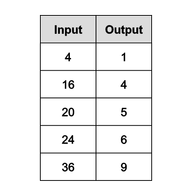
Students identify, describe, generate, and extend growing and repeating patterns using whole numbers, visual representations, sequences, tables, and simple addition, subtraction, or multiplication rules. They determine and apply one-step input-output rules, complete missing entries, and recognize relationships in addition and multiplication tables, including sums and products within 100 and exact whole-number division relationships. Students understand the equals sign as expressing equivalent quantities, use symbols for unknowns, balance and solve one-step addition, subtraction, multiplication, and division equations, and write equations for one- and two-step whole-number word problems, with addition and subtraction quantities within 1,000.
- See 18 Skills
Students represent, read, write, compose, and decompose whole numbers through 100,000 using standard, expanded, and word forms, identify digit places and values through the hundred-thousands place, and model numbers through 1,000 with base-ten blocks. They count forward and backward by 1s, 10s, 100s, and 1,000s, skip-count by 2s, 3s, 4s, 5s, 6s, 8s, 9s, and 10s, locate missing numbers and whole numbers on number lines through 1,000, and compare or order numbers through 100,000. They round whole numbers to the nearest 10 and 100 and estimate quantities using benchmarks such as 10, 100, and 1,000.





Builds on multi-digit multiplication and division, deepens understanding of fractions and decimals, and introduces geometry concepts like angles, lines, and symmetry. Focuses on solving multi-step word problems and understanding factors and multiples for number theory foundations.
11 groups- See 13 Skills
Students add and subtract multi-digit whole numbers through 1,000,000 using place-value reasoning, partial sums, and the standard algorithms, including regrouping across zeros. They estimate sums and differences, check results for reasonableness, and solve missing-value equations using the inverse relationship between addition and subtraction. They model and solve one-step, comparison, and multi-step word problems involving whole-number quantities with equations, bar models, or number lines.
- See 18 Skills
Organize and represent categorical, discrete, and measured data in frequency tables, pictographs, scaled bar graphs, line graphs, and line plots, using accurate labels, keys, intervals, and scales, including halves, fourths, and eighths on line plots. Interpret these displays to compare values and frequencies, find totals and differences, identify changes over ordered sequences, and calculate the median, mode, and range for small whole-number data sets. Describe, compare, and express simple probabilities as fractions, conduct repeated chance experiments, and distinguish theoretical probability from experimental results in terms of impossible, unlikely, equally likely, likely, and certain events.
- See 16 Skills
Students represent, read, write, and expand nonnegative decimals through hundredths, identifying the ones, tenths, and hundredths places and connecting decimals with fractions, models, and equivalent forms. Students compare, order, and locate decimals through hundredths and add or subtract them by aligning place values and regrouping across ones, tenths, and hundredths. Students apply these skills to solve measurement and money problems involving tenths and hundredths, including interpreting quantities, finding totals, differences, costs, change, and unknown amounts.
- See 14 Skills
Interpret division as equal grouping and equal sharing, recall related multiplication–division facts with products up to 100, and solve whole-number missing-factor problems. Divide two-, three-, and four-digit whole numbers by one-digit divisors using place-value models, partial quotients, or the standard algorithm, writing exact quotients or quotients with remainders less than the divisor. Estimate quotients using rounding or compatible numbers, check results with multiplication, and solve division situations by representing equations, interpreting remainders appropriately, and determining whether answers are reasonable.
- See 10 Skills
Identify factors, multiples, and factor pairs for whole numbers through 100 using multiplication, division, arrays, and skip-counting, including common factors and common multiples. Classify numbers through 100 as prime, composite, or neither, recognizing that primes have exactly two positive factors, composites have more than two, and 1 is neither. Recognize even and odd numbers and apply divisibility rules for 2, 3, 5, 9, and 10 to determine factors and multiples.
- See 23 Skills
Students interpret, represent, and locate positive fractions, proper fractions, improper fractions, and mixed numbers using area, set, and number-line models, including unit fractions and fractions greater than one. They recognize, generate, and simplify equivalent fractions; decompose fractions into sums of like-denominator unit fractions; compare and order fractions using common numerators or denominators, benchmarks, equivalent fractions, and number lines. They add and subtract fractions and mixed numbers with like denominators, multiply fractions by whole numbers, and solve related word problems, including regrouping and expressing results as mixed numbers when appropriate.
- See 18 Skills
Students identify points, lines, line segments, rays, and parallel, intersecting, and perpendicular lines; classify, measure, and draw acute, right, and obtuse angles from 0° to 180° using a protractor; and use angle addition and subtraction to find unknown whole-number angle measures. Students classify triangles by angle measures and side lengths, classify quadrilaterals as trapezoids, parallelograms, rectangles, rhombi, or squares using their attributes and overlapping relationships, and identify the properties of parallelograms, rectangles, and squares and congruent figures. Students identify and draw lines of symmetry, and recognize translations, rotations, and reflections as transformations that preserve a figure’s size and shape while changing its position or orientation.
- See 18 Skills
Measure and compare length, mass, and capacity using appropriate customary and metric units, read rulers and scales, and convert within systems, including inches, feet, yards, miles; millimeters, centimeters, meters, kilometers; grams and kilograms; and liters and milliliters. Convert and interpret time in seconds, minutes, hours, days, and weeks, read analog and digital clocks to the minute, measure angles with a protractor to the nearest degree, and recognize benchmark angles of 90°, 180°, and 360°. Find and compare the area of rectangles and composite rectangles, determine missing dimensions from area, find polygon perimeters, distinguish area from perimeter, and solve measurement problems involving whole-number and familiar mixed-unit quantities through addition, subtraction, multiplication, division, and elapsed-time reasoning.
- See 17 Skills
Students interpret multiplication as equal groups, arrays, rectangular area, and multiplicative comparisons, connecting factors and products through equations, diagrams, repeated addition, and the commutative and associative properties. They recall multiplication facts through 12×12, recognize whole-number patterns, apply the distributive property, multiply numbers up to four digits by one-digit factors and two two-digit factors, and multiply by multiples of 10 using place-value reasoning, partial products, area models, and the standard algorithm. They estimate whole-number products by rounding or using compatible numbers and solve one- and two-step multiplication and multiplicative comparison problems with unknown factors, quantities, or products.
- See 19 Skills
Students identify, describe, generate, extend, and analyze repeating, growing, and numerical patterns involving whole-number rules such as adding, subtracting, multiplying, or dividing by a fixed number, using sequences, diagrams, number lines, and tables to find missing or later terms and infer features such as increase, repetition, alternation, or oddness and evenness. They complete and interpret input-output tables, determine and verify consistent one- or two-step rules, and evaluate whole-number expressions with addition, subtraction, multiplication, division, and parentheses while finding missing values in equivalent expressions. They represent equality as a balance and use symbols to solve one-step whole-number equations and simple one- or two-step word problems involving addition, subtraction, multiplication, and division, checking solutions with inverse operations and substitution.
- See 15 Skills
Understand, read, write, and represent whole numbers from 0 through 1,000,000 in standard, expanded, and word forms, identifying each digit’s place and value through the millions place and using zeros as placeholders. Compare and order whole numbers, identify whole numbers between benchmarks, and locate them on scaled number lines using place-value reasoning and the symbols <, >, and =. Recognize ten times as much and one tenth as much through base-ten relationships, and round whole numbers through the millions place, including to the nearest 10, 100, and 1,000.
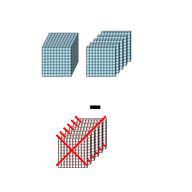


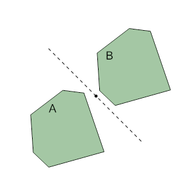



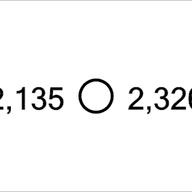
Strengthens skills in working with fractions and decimals, including addition, subtraction, multiplication, and division. Introduces volume, explores more complex geometrical shapes, and begins basic algebraic thinking with simple expressions and equations. Emphasizes problem-solving and critical thinking.
11 groups- See 7 Skills
Students add and subtract multi-digit whole numbers through commonly used large place values by aligning place values, regrouping across one or more zeros, and using place-value representations to explain and check the standard algorithms. They add and subtract decimals through hundredths, estimate differences using rounding or compatible numbers, and assess whether exact results are reasonable. They solve one-step addition problems involving whole numbers, decimals, and appropriately represented fractions, as well as multi-step addition and subtraction problems using equations, models, and contextual reasoning.
- See 13 Skills
Read and interpret tables, scaled bar graphs, line graphs, line plots with halves and fourths, and first-quadrant coordinate graphs to retrieve, compare, total, and analyze data. Calculate and interpret the mean, median, mode, and range of small, ungrouped data sets, including whole numbers and familiar decimals or fractions. Represent, compare, and investigate simple probabilities as fractions from 0 to 1, identifying equally likely outcomes and relating experimental results to theoretical probability.
- See 9 Skills
Read, write, identify, and expand nonnegative decimals through the thousandths place, including tenths, hundredths, thousandths, zero placeholders, equivalent trailing-zero forms, and conversions between decimals and fractions with denominators of 10, 100, or 1,000. Compare, order, and round decimals through the thousandths place, and add or subtract them by aligning place values, inserting equivalent zeros, and regrouping as needed. Solve contextual problems involving decimals through the thousandths place by selecting appropriate addition, subtraction, multiplication, or division, representing quantities with equations or models, and checking results through estimation and place-value reasoning.
- See 8 Skills
Students recall division facts with products through 100 and divide two-digit and multi-digit whole-number dividends by one-digit divisors using place value, partial quotients, area models, or the standard algorithm. They divide typically up to four-digit dividends by two-digit divisors, estimate quotients using rounding and compatible numbers, and verify results with multiplication while expressing remainders as less than the divisor. Students solve division word problems involving equal groups or group size, represent relationships with equations or models, and interpret remainders as leftovers, ignored quantities, or additional groups, with limited contexts involving a unit fraction divided by a whole number.
- See 9 Skills
Apply divisibility rules for 2, 3, 4, 5, 6, 9, and 10 to multi-digit whole numbers to identify factors and multiples. Identify factors and multiples, and classify whole numbers through 100 as prime or composite, recognizing that 1 is neither. Find common factors and common multiples of familiar whole numbers and determine the greatest common factor and least common multiple for pairs of numbers no greater than 100.
- See 17 Skills
Students identify, represent, locate, and interpret proper, improper, and mixed numbers using area models, sets, number lines, and benchmark fractions, and recognize, generate, convert, and simplify equivalent fractions. Students compare and order positive fractions and mixed numbers with common or unlike denominators using equivalent fractions, common numerators or denominators, benchmarks, and number-line reasoning. Students add and subtract fractions and mixed numbers with like denominators, including regrouping, and solve contextual problems involving unlike-denominator addition and subtraction, finding a fraction of a quantity, and division situations with a whole number and a unit fraction.
- See 10 Skills
Classify triangles by angle measures as acute, right, or obtuse and by side lengths as equilateral, isosceles, or scalene, and classify quadrilaterals hierarchically using properties such as parallel or perpendicular sides, congruent side lengths, and right angles, including trapezoids, parallelograms, rectangles, rhombuses, squares, and kites. Identify, measure, and draw angles from 0° to 180° with a protractor, correctly distinguishing acute, right, obtuse, and straight angles regardless of ray length or orientation. Identify lines of symmetry, parallel lines, and perpendicular lines, and plot and interpret points represented by nonnegative whole-number ordered pairs in the first quadrant of the coordinate plane.
- See 13 Skills
Convert among metric length units (kilometers, meters, centimeters, and millimeters), capacity units (kiloliters, liters, and milliliters), and mass units (kilograms, grams, and milligrams), as well as customary length (inches, feet, yards, miles), capacity (fluid ounces, cups, pints, quarts, gallons), and weight (ounces, pounds, tons), using the given whole-number, decimal, or familiar fractional relationships. Estimate and solve area and perimeter problems for rectangles, composite rectilinear figures, and other polygons, including partitioning figures, inferring missing side lengths, using square units, and distinguishing surface coverage from distance around a figure. Solve elapsed-time and multistep measurement word problems involving hours and minutes, unit conversions, whole numbers, fractions, and decimals while selecting appropriate operations and preserving units.
- See 9 Skills
Recall multiplication facts through 12, identify patterns when multiplying by 0, 1, 10, 100, and 1,000, and multiply by multiples of 10 using place-value relationships. Use place-value decomposition, partial products, area models, and the standard algorithm to multiply whole numbers, including 2-digit by 2-digit, 3-digit by 2-digit, and larger cases such as 4-digit by 2-digit, with accurate regrouping and alignment. Estimate products and solve multiplication problems involving multi-digit whole numbers, decimals, and fractions by interpreting equal groups, arrays, area, or scaling, selecting appropriate operations and checking the magnitude and units of results.
- See 8 Skills
Students identify, extend, and compare numerical and arithmetic patterns in lists and tables, including whole-number patterns and familiar decimal sequences generated by repeated addition, subtraction, multiplication, or division, and represent corresponding pairs on coordinate grids to predict missing or later values and explain term-to-term or input-based rules. Students generate and complete input-output tables, distinguish inputs from outputs, and infer or apply numerical rules involving a fixed operation or two straightforward operations. Students evaluate grouped numerical expressions with parentheses using whole-number addition, subtraction, multiplication, and division, applying grouping and multiplication or division before addition or subtraction, and use variables to represent unknowns in solving and checking one-step equations and contextual problems with appropriate units.
- See 15 Skills
Read, write, and represent whole numbers from 0 through 999,999,999 in standard, word, and expanded forms, identifying each digit’s value and recognizing powers of 10 through 103. Compare and order multi-digit whole numbers using place value, and round them to any specified place, including the nearest 10, 100, and 1,000, to estimate sums and products with reasonable accuracy. Multiply and divide whole numbers by 10, 100, and 1,000 using place-value shifts, including interpreting zeros as placeholders and recognizing that quotients may be terminating decimals.

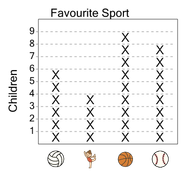

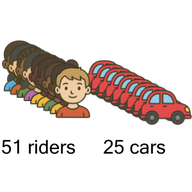



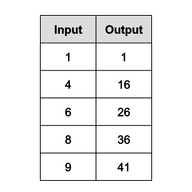
Focuses on ratios and proportional relationships, introduces the concept of negative numbers, and begins formal algebraic thinking with variables and expressions. Explores data analysis, statistical measures, and basic geometry, including area, surface area, and volume of shapes.
11 groups- See 37 Skills
Students identify variables, constants, coefficients, and terms; translate between words and algebraic expressions; evaluate expressions with whole numbers, integers, fractions, and finite decimals using grouping symbols, whole-number exponents, and order of operations; and generate equivalent forms by combining like terms, applying properties, expanding, and factoring simple expressions. Students represent equations with balance models, tape diagrams, and one-step or simple multi-step contexts; write and solve addition, subtraction, multiplication, division, and fractional-coefficient equations; and check solutions by substitution while preserving equality. Students interpret, write, solve, and graph simple one-variable inequalities with whole numbers and familiar rational values, and use input-output tables, rules, ordered pairs, and coordinate graphs to describe dependent and independent variables and distinguish proportional from non-proportional patterns.
- See 34 Skills
Students distinguish statistical questions, collect categorical and numerical data consistently, and organize observations in tables or frequency tables. They choose, create, and interpret bar graphs, dot plots, line plots, line graphs, histograms, circle graphs, and informal box plots, using accurate scales to identify frequencies, trends, clusters, gaps, center, and spread. They calculate and apply mean, median, mode, range, interquartile range, and informal mean absolute deviation to compare distributions and support descriptive conclusions while considering variability, outliers, misleading displays, and sample representativeness.
- See 20 Skills
Students read, write, expand, compare, order, locate, round, and convert finite decimals through the thousandths place, connecting them to fractions with denominators of 10, 100, or 1,000, mixed numbers, and measurement. They add, subtract, multiply, and divide decimals and whole numbers, including multiplication or division by 10, 100, and 1,000, while applying order of operations and using place-value reasoning, compatible numbers, and estimation to check results. Students solve multistep money, measurement, and other word problems involving positive terminating decimals, interpret remainders and units, and judge whether answers are reasonable.
- See 34 Skills
Students represent, locate, compare, order, simplify, and convert positive fractions, improper fractions, and mixed numbers, including generating equivalent forms and finding least common denominators. They add and subtract fractions and mixed numbers with like and unlike denominators, multiply fractions and mixed numbers, and divide fractions using models and reciprocals, including finding a fraction of a quantity. Students use benchmark fractions, estimation, area and number-line models, and operation reasoning to solve and check single-step and multistep fraction problems in context.
- See 34 Skills
Students identify and classify points, lines, rays, segments, angles, triangles, quadrilaterals, polygons, and solids using defining properties such as side lengths, angle measures, parallelism, perpendicularity, symmetry, and relationships among special quadrilaterals. They measure and construct angles, use complementary, supplementary, triangle, quadrilateral, and full-turn angle relationships to find unknown measures, and reason about congruence, informal similarity, dilations, and lines and rotational symmetry. Students represent and perform translations, reflections, and rotations on coordinate planes, construct nets of prisms and pyramids, and identify informal cross-sections of common solids.
- See 22 Skills
Students represent, interpret, compare, and order integers on number lines, including zero, opposites, absolute value, and positive or negative quantities in contexts such as temperature, elevation, gains, losses, and direction. Students read and plot integer ordered pairs, locate points in all four quadrants or on the axes, identify quadrants, graph polygons, and recognize or create symmetry through reflections across the x- and y-axes. Students find horizontal and vertical distances and side lengths using absolute differences of coordinates and use coordinates to solve perimeter and area problems involving simple rectangles and polygons, without applying diagonal distance formulas.
- See 33 Skills
Students analyze and decompose routine and non-routine problems by identifying relevant, irrelevant, and missing information; representing relationships with diagrams, tables, graphs, equations, expressions, and number lines; and working with whole numbers, integers, fractions, decimals, ratios, rates, percentages, and familiar measurements. They select efficient operations, tools, and strategies; work backward or use logical elimination; estimate before and after calculating; check precision, rounding, units, inverse operations, and algebraic solutions by substitution; and interpret results in context. They communicate complete justifications, compare and critique strategies and solutions, create related problems and statistical questions, recognize and generalize patterns, organize cases, and form, test, support, or disprove conjectures using examples and counterexamples.
- See 30 Skills
Students estimate and measure length, mass, capacity, and time using appropriate customary and metric units, record measurements to specified precision, calculate elapsed time, and convert among common units, including inches, feet, yards, miles; ounces, pounds, tons; cups, pints, quarts, gallons; millimeters, centimeters, meters, kilometers; milligrams, grams, kilograms; milliliters, liters, kiloliters; and seconds, minutes, hours, days, and weeks. Students calculate perimeter and area of polygons, rectangles, parallelograms, triangles, and composite figures; determine missing side lengths and dimensions; and solve scale-drawing and measurement problems involving whole numbers, fractions, and decimals. Students find and interpret the volume and surface area of rectangular prisms and familiar solids using unit cubes, nets, formulas, and decomposition, while solving multi-step contextual problems and applying conversion factors with consistent linear, square, cubic, and compound units.
- See 18 Skills
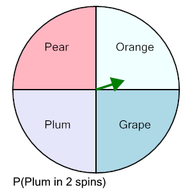
Determine theoretical probabilities for simple events in finite, equally likely sample spaces, including cards, colored objects, fair dice, and spinners, by listing outcomes with organized lists, tables, or tree diagrams and expressing probabilities as fractions, decimals, or percentages from 0 to 1. Find complementary probabilities, compare likelihoods, identify fair and unfair games, and use probability to make decisions or predict frequencies through multiplication by the number of trials. Conduct experiments and simulations to calculate relative frequencies, explain short-run variation and increasing stability with more trials, compare experimental and theoretical probabilities, and solve simple compound-event problems without conditional probability or advanced probability models.
- See 34 Skills
Students interpret, write, represent, compare, simplify, and generate equivalent ratios using words, colon notation, fractions, tables, double number lines, and tape diagrams, and solve part-to-part, part-to-whole, missing-value, scaling, and other ratio problems through multiplicative reasoning. Students calculate, interpret, compare, and use unit rates, including price per item and speed, convert rates between compatible units, and solve problems involving whole numbers, fractions, and decimals while attending to units and order. Students interpret percent as per hundred, relate fractions, decimals, and percents, represent and estimate percents with hundred grids and benchmarks, find a percent of a quantity or the whole from a familiar percent, and solve simple discount, tax, and tip problems.
- See 42 Skills
Students read, write, expand, compare, order, round, and identify the place value of whole numbers through billions, and use estimation to assess sums, differences, products, and quotients. They accurately add, subtract, multiply, and divide multi-digit whole numbers, including division by one- and two-digit divisors, using standard algorithms, partial products or quotients, powers of ten, remainders, divisibility rules, and multi-step problem-solving strategies. They apply operation properties and order of operations, evaluate powers and parentheses, represent squares and cubes, identify factors, multiples, primes, composites, and factor pairs, and determine prime factorizations, common factors and multiples, greatest common factors, and least common multiples.
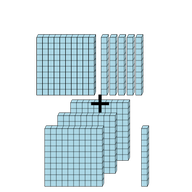


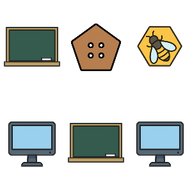
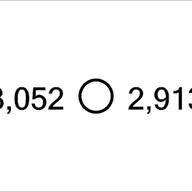

Develops understanding of algebraic expressions and linear equations, works with rational numbers and proportions, and introduces probability and statistics. Explores geometric concepts like scale drawings, circles, and three-dimensional figures to build a strong mathematical foundation.
12 groups- See 9 Skills
Formulate statistical questions that anticipate variability, distinguish categorical from numerical data and discrete from continuous data, and select appropriate data-collection methods, including a census, representative sample survey, observational study, or experiment. Calculate and interpret the mean, median, mode, and range for ungrouped data, select an appropriate measure of centre based on distribution and extreme values, and recognize biased survey wording and answer choices. Construct and interpret circle graphs using category frequencies, fractions, percentages, and central angles totaling 360∘, and identify misleading scales, intervals, labels, units, boundaries, category choices, or visual dimensions in data displays.
- See 10 Skills
Interpret equations as statements that two expressions are equal, using balance models and equivalent operations on both sides to represent one-variable relationships with integers and rational numbers. Represent one-variable inequalities on number lines with open or closed endpoints and shading for the full solution range, including positive and negative fractions and decimals, and reverse the inequality symbol when multiplying or dividing by a negative. Write and solve one-step and straightforward two-step linear equations and inequalities from contexts using inverse operations, then verify equation solutions by substitution and interpret results in context.
- See 10 Skills
Add and subtract positive and signed fractions with unlike denominators by finding common denominators, simplifying results, and expressing answers as fractions or mixed numbers; multiply fractions and mixed numbers, and divide whole numbers by positive proper fractions or mixed numbers using models and reciprocals. Convert among fractions, terminating decimals, repeating decimals, and percents by preserving equivalence, including decimals through thousandths and percents less than, equal to, or greater than 100%; express terminating decimals as simplified fractions with denominators of tenths, hundredths, or thousandths. Compare and order positive rational numbers represented as fractions, decimals, or percents using benchmarks, number lines, place value, or common representations, while reasoning about magnitude and proportional relationships.
- See 9 Skills
Classify triangles by angle measures and side-length relationships, use the 180∘ triangle angle sum to determine unknown angles, and construct triangles from given side or angle measurements using the triangle inequality and angle-sum constraints. Identify complementary and supplementary angles, and determine unknown angles formed by intersecting lines using vertical-angle equality and linear-pair sums of 180∘, including simple numerical or algebraic equations. Classify quadrilaterals by properties such as parallel or perpendicular sides, equal side lengths, and angle relationships, recognizing inclusive categories among parallelograms, rectangles, rhombi, squares, kites, and trapezoids.
- See 9 Skills
Students represent, locate, compare, and order positive and negative integers and zero on a number line, interpret their signs in real-world contexts, and determine absolute values as distances from zero. Students add and subtract integers using number lines, counters, and symbolic rules, including zero pairs, additive inverses, opposite signs, and negative results. Students evaluate numerical expressions involving integers by applying grouping symbols, whole-number exponents, multiplication and division, and addition and subtraction in the correct order.
- See 10 Skills
Students identify independent and dependent variables and represent linear relationships with tables, graphs, and equations such as y=kx and y=mx+b. They recognize constant first differences and constant rates of change, determine rate of change from tables or graphs as Δy/Δx, and distinguish linear relationships from nonlinear ones. Students plot ordered pairs, interpret points and scales in context, and distinguish proportional relationships that pass through the origin from nonproportional linear relationships with an initial value.
- See 10 Skills
Calculate the areas of triangles, parallelograms, trapezoids, and composite figures using perpendicular heights, decomposition, and addition or subtraction, and calculate composite perimeters by summing all exterior boundaries while excluding shared interior edges. Calculate the surface area and volume of rectangular prisms using 2lw+2lh+2wh and lwh, respectively, and convert among common metric units of length, area, and volume, including millimeters, centimeters, meters, kilometers, milliliters, and liters, using scale factors and their squares or cubes. Relate radius and diameter with d=2r and r=d/2, and explore circumference as proportional to diameter using C=πd, with π approximated by 3.14 or 722.
- See 10 Skills
Students extend numerical patterns involving addition, subtraction, multiplication, division, integers, fractions, and decimals, represent them in tables and simple one-variable algebraic expressions, and describe their rules precisely in words using whole-number term positions. Students identify variables, coefficients, constants, terms, and like terms; translate between verbal phrases and algebraic expressions while preserving operation order, grouping, and meaning. Students combine like terms using whole-number coefficients and evaluate expressions by substituting integers, fractions, or decimals, applying parentheses, operations, and simple whole-number exponents in the correct order.
- See 10 Skills
Apply divisibility tests for 2, 3, 4, 5, 6, 8, 9, and 10; determine prime factorizations, greatest common factors, and least common multiples of positive whole numbers using factorization or lists. Interpret and write repeated multiplication in exponent notation and evaluate powers with whole-number bases and exponents, including powers of 10, the convention a0=1 for nonzero bases, and the sign effects of even and odd exponents on negative bases while distinguishing (−a)n from −an. Recognize perfect squares from 0 through 144 and determine their principal whole-number square roots, while understanding that equations such as x2=49 have both positive and negative integer solutions.
- See 7 Skills
Students represent finite sample spaces with organized lists and tree diagrams, determine theoretical probabilities from equally likely outcomes and experimental probabilities from relative frequencies, and express, compare, and interpret probabilities as fractions, decimals, and percents, including complements and expected variation across repeated trials. They calculate sale prices by applying a discount percentage, calculate taxes and tips as percentage increases to a stated base or recover an original amount when appropriate, and compare values using unit prices with equivalent units and monetary amounts rounded to cents. They create and evaluate simple budgets by organizing income, savings, and fixed or variable expenses, calculating spending percentages, and determining whether allocations produce a surplus or deficit without using compound interest, credit charges, taxes, or investment decisions.
- See 9 Skills
Students interpret ratios in context, distinguish part-to-part from part-to-whole comparisons, write them in words, colon, and fraction forms, and generate, simplify, and compare equivalent ratios by scaling both terms consistently. They interpret rates as multiplicative comparisons between quantities, calculate and compare unit rates involving positive whole numbers, decimals, and fractions, and distinguish rates from total amounts in contexts, tables, equations, and graphs. They recognize proportional relationships through constant ratios or unit rates, tables of equivalent ratios, equations of the form y=kx, and graphs that pass through the origin, and use scale factors or unit rates to solve missing-value problems.
- See 10 Skills
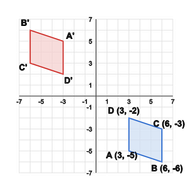
Students plot and identify points in all four quadrants and on the axes using ordered pairs, and determine horizontal or vertical distances by comparing the relevant coordinates. Students translate figures using integer-coordinate shifts, reflect them across the coordinate axes, and rotate them about the origin by 90∘, 180∘, or 270∘, applying coordinate rules to locate images. Students perform ordered sequences of these transformations, recognize that changing the order can change the image, and identify congruent figures by matching corresponding vertices, side lengths, and angle measures.
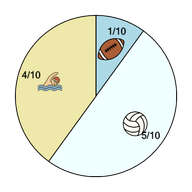






Emphasizes solving linear equations and systems of equations, explores functions and their properties, and covers advanced geometry, including transformations and the Pythagorean Theorem. Prepares students for more advanced algebra with a focus on analytical thinking and problem-solving.
12 groups- See 10 Skills
Students identify variables, coefficients, constants, terms, and like terms, and translate between algebraic expressions and precise verbal descriptions involving sums, differences, products, quotients, grouping, and whole-number exponents. They evaluate expressions by substituting integer or rational values and applying order of operations, and recognize equivalent expressions using the commutative, associative, and distributive properties. They expand expressions with the distributive property, combine like terms, factor common numerical factors, and simplify multi-step expressions containing parentheses, variables, constants, and integer or rational coefficients.
- See 11 Skills
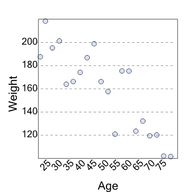
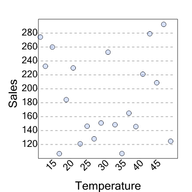
Classify data as categorical or numerical and as discrete or continuous, select appropriate censuses, surveys, observations, or experiments, and evaluate samples and survey questions for representativeness and bias. Calculate and interpret mean, median, mode, and range, explain how outliers affect measures of center, construct and interpret histograms, and identify misleading scales, intervals, labels, and visual features in data displays. Construct scatter plots of paired numerical data and describe positive, negative, or nonexistent associations, including linear or nonlinear patterns, clusters, gaps, and outliers, without inferring causation or using regression or correlation coefficients.
- See 11 Skills
Students model equations with balance diagrams, interpreting the equal sign relationally and writing one-variable linear equations and inequalities from contexts involving quantities, rates, totals, comparisons, and constraints. They solve one-step and two-step linear equations with integer and rational coefficients using equality-preserving inverse operations, including variables in different positions, and verify solutions by substitution while recognizing when an equation has one, no, or infinitely many solutions. They solve one-step inequalities, reversing the inequality when multiplying or dividing by a negative, and represent rational and compound solution sets symbolically and on number lines with appropriate open or closed endpoints and shaded regions.
- See 10 Skills
Students convert among fractions, terminating decimals, and percents, simplify equivalent forms, and compare or order positive and negative rational numbers, including zero, using signs, common units, and number-line reasoning. Students add, subtract, multiply, and divide numerical fractions, mixed numbers, decimals, and signed fractional quantities, interpreting operations, simplifying results, estimating, and recognizing that division by zero is undefined. Students evaluate numerical expressions involving rational numbers by applying grouping symbols, whole-number exponents, and the order of multiplication or division before addition or subtraction, while preserving equivalent values and signs.
- See 9 Skills
Use angle relationships for intersecting lines, perpendicular lines, and parallel lines cut by a transversal to determine unknown measures with vertical, corresponding, alternate, linear-pair, and supplementary relationships. Apply triangle angle sums, exterior-angle and isosceles relationships, and polygon angle-sum formulas to determine unknown angles, including angles in regular and irregular convex polygons. Classify triangles by angle and side lengths, apply the Pythagorean theorem to find unknown side lengths, and use its converse to determine whether a triangle is right.
- See 9 Skills
Students represent, compare, and order integers on a number line, identify opposites and additive inverses, and interpret absolute value as nonnegative distance from zero for integers and rational numbers. They add, subtract, multiply, and divide integers using sign rules, including the roles of zero and undefined division by zero, and represent non-exact quotients as rational numbers. They evaluate and solve multi-step numerical problems using grouping symbols, nonnegative integer exponents, and the conventional order of operations while interpreting signed quantities and checking results for reasonableness.
- See 14 Skills
Students identify independent and dependent variables and distinguish linear relationships by their constant rate of change, including positive, negative, and zero rates and proportional and nonproportional relationships. They represent and interpret linear relationships in tables, graphs, equations, and contexts, determining rate of change from Δy/Δx, identifying the initial value, and connecting these features to y=mx+b. They graph linear equations, write equations from tables and graphs using whole-number or simple fractional slopes, and compare relationships by matching inputs and outputs and interpreting their rates of change and initial values, including when the relationships intersect.
- See 9 Skills
Students determine radius and diameter using d=2r and r=d/2, and calculate circle circumference with C=2πr=πd and area with A=πr2, reporting linear or square units and exact or appropriately approximated values. They find the area of polygonal composite figures by decomposing or subtracting familiar regions and convert metric units of length, area, and volume across millimeters, centimeters, meters, and kilometers using factors of 10, 102, and 103, respectively. They calculate prism and cylinder volumes and surface areas using V=Bh, V=πr2h, SA=2B+Ph, and SA=2πr2+2πrh, and solve composite-solid problems by adding component measures or subtracting missing sections while excluding shared internal surfaces from exterior area.
- See 11 Skills
Interpret and evaluate powers with whole-number exponents, including integer and negative bases, zero exponents, parentheses, and the product, quotient, and power-of-a-power rules, without using negative or fractional exponents. Recognize perfect squares and determine their principal square roots from 0 through 225, and estimate nonperfect square roots between consecutive integers whose squares bound them. Write large and small nonzero numbers in scientific notation and convert between scientific and standard form, using a×10n with 1≤a<10 and interpreting positive and negative integer exponents through place value.
- See 8 Skills
Students calculate discounts, markups, taxes, tips, percent increases and decreases, and simple interest using percent equations, decimal multipliers, and I=Prt, distinguishing the original amount, rate, change, and final total. They compare financial options by translating rates, unit costs, fixed fees, and transaction charges to a common basis using tables, equations, graphs, and unit rates. They determine and compare theoretical and experimental probabilities and analyze compound events with organized lists and tree diagrams, adding probabilities of mutually exclusive outcomes, multiplying probabilities of successive outcomes, and accounting for dependent events.
- See 10 Skills
Students write, simplify, generate, and compare ratios in colon, word, and fraction forms using positive whole-number and rational quantities, preserving the order and multiplicative relationship. They interpret rates and calculate and compare unit rates, including rates involving fractions and decimals, across tables, graphs, equations, and real-world contexts with appropriate units. Students recognize proportional relationships in tables, graphs, and equations, determine and interpret the constant of proportionality, solve proportions using equivalent ratios, and apply proportional reasoning to scale drawings while maintaining consistent units.
- See 10 Skills
Plot points in all four quadrants, identify points on the axes and origin, and determine horizontal and vertical distances using absolute differences of coordinates. Apply coordinate rules for translations, reflections across the axes, and quarter- or half-turn rotations about the origin, including sequences of transformations in a specified order, to predict image coordinates and analyze preserved lengths, angles, and shape. Identify congruent figures through rigid motions and equal corresponding measurements, and identify similar figures through proportional corresponding side lengths, congruent angles, and a single scale factor, including dilation.





Focuses on understanding and applying linear equations, inequalities, and functions, introduces quadratic equations and basic polynomials. Explores real numbers, exponents, and radicals to build a foundation for advanced algebraic concepts and problem-solving skills.
13 groups- See 10 Skills
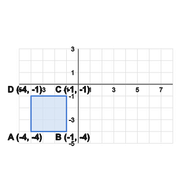
Plot and interpret points in all four quadrants, including points on the axes and with negative coordinates, and calculate horizontal and vertical distances, midpoints, and missing endpoints using coordinate relationships. Calculate and interpret positive, negative, zero, and undefined slopes, determine whether lines are parallel, and write equations of lines from a slope and y-intercept or from two points. Use coordinate methods to solve geometric problems involving collinearity, lengths, areas, and properties of triangles and quadrilaterals.
- See 14 Skills
Calculate and interpret mean, median, mode, range, quartiles, interquartile range, and outliers, and construct and interpret box-and-whisker plots to compare center and spread while considering the effect of extreme values. Distinguish categorical, numerical, discrete, and continuous data; identify populations, samples, and variables; evaluate sampling methods for bias; and recognize misleading data displays and statistical claims. Construct scatter plots, describe the direction and strength of associations, draw and use informal lines of best fit for predictions within or near the observed range, and distinguish interpolation from less reliable extrapolation without inferring causation.
- See 12 Skills
Students calculate discounts, markups, sales taxes, tips, percent increases, and percent decreases using appropriate original amounts, decimal multipliers, sequential changes, and accurate money rounding. They determine gross earnings and pay from hourly wages, salaries, commissions, bonuses, and straightforward overtime, interpret payroll deductions, and calculate net income from fixed-dollar and percentage deductions. They create and analyze personal budgets by classifying expenses, calculating totals and savings, comparing financial options using rates and fees, and applying simple interest I=Prt to interpret principal, rate, time, interest, and total amount.
- See 10 Skills
Apply angle relationships at intersections and with parallel lines cut by a transversal, including vertical, corresponding, alternate, and same-side interior angles, linear pairs, perpendicular lines, and simple equations for unknown measures. Use triangle and quadrilateral properties, including angle sums, exterior-angle relationships, side and diagonal relationships, and specialized properties of rectangles, rhombi, squares, parallelograms, and isosceles trapezoids. Apply interior- and exterior-angle sums to convex polygons, find angles of regular polygons, and justify unknown-angle solutions from marked diagrams using symbolic and written geometric reasoning rather than visual appearance.
- See 9 Skills
Students solve one-variable linear equations using inverse operations, the distributive property, and combining like terms, including equations with integers, terminating decimals, fractions, parentheses, and variables on both sides. They preserve equality, recognize when an equation has one solution, no solution, or infinitely many solutions, and verify proposed solutions by substitution into the original equation. Students translate real-world relationships into linear equations, identify variables, rates, initial values, and units, connect verbal, tabular, graphical, and symbolic representations, and interpret whether solutions are meaningful in context.
- See 14 Skills
Students identify independent and dependent variables and represent linear relations using tables, graphs, and equations in two variables, including slope-intercept form y=mx+b. They determine and interpret constant rates of change from tables, graphs, equations, and contexts, including positive, negative, zero, and fractional slopes with appropriate units, and determine y-intercepts from graphs and equations. Students write equations from tables and graphs, graph slope-intercept equations, and compare multiple linear relations by analyzing rates of change, initial values, outputs for shared inputs, and points of intersection.
- See 9 Skills
Calculate the circumference and area of circles using radius or diameter, exact or approximated π, and determine the perimeter and area of composite plane figures by partitioning shapes, inferring missing lengths, and distinguishing boundaries from regions. Calculate the surface area and volume of prisms and right circular cylinders, using nets and formulas, appropriate linear, square, or cubic units, and distinguish exposed surfaces from shared or internal boundaries when solving problems involving composite solids. Convert decimal measurements among common metric units of length, area, and volume, including millimetres, centimetres, metres, kilometres, and litres, applying squared conversion factors for area, cubed factors for volume, and 1 L=1 dm3.
- See 10 Skills
Students identify terms, coefficients, constants, variable parts, and like terms in one-variable polynomials with numerical coefficients and nonnegative integer exponents, and classify polynomials by degree and number of terms. Students add, subtract, and simplify polynomials by combining like terms, apply the distributive property to expand products of monomials and manageable polynomials, multiply a polynomial by a monomial, and recognize equivalent expressions in standard form. Students factor out a common monomial by reversing the distributive property, using appropriate numerical factors and variable exponents while managing signs, parentheses, and integer or rational coefficients.
- See 10 Skills
Evaluate powers with integer exponents, including zero and negative exponents, for integers, fractions, and terminating decimals, while attending to parentheses, signs, and order of operations. Apply exponent laws for products, quotients, powers of powers, products, and quotients to simplify numerical and algebraic expressions with integer exponents, including zero and negative exponents for nonzero bases. Determine exact principal square and cube roots of familiar perfect powers and estimate non-perfect square roots using nearby perfect squares, bounding values to the tenths or hundredths when appropriate.
- See 7 Skills
Represent finite sample spaces for simple one- and multi-step experiments using organized lists, tables, and tree diagrams, and calculate theoretical probabilities by counting equally likely favorable outcomes out of all outcomes. Determine probabilities of complementary, mutually exclusive, and independent compound events using complements, addition, and multiplication, including simple “at least one” situations while excluding conditional probability and dependent events. Calculate experimental probabilities and use simulations to estimate them, then compare experimental and theoretical values in fractions, decimals, percentages, tables, or graphs while explaining random variation and the stabilizing effect of more trials.
- See 9 Skills
Classify and interpret natural, whole, integer, rational, irrational, and real numbers, including their containment relationships, decimal forms, signs, magnitudes, units, and contextual meanings. Compare, order, and locate real numbers on a number line, including integers, fractions, terminating or repeating decimals, square roots, and familiar irrational numbers such as 2, 3, and π, using rational bounds and appropriate decimal approximations. Evaluate real-number expressions by applying grouping symbols, exponents, roots, and operations in the correct order, distinguish exact values from estimates, recognize undefined operations, and solve contextual problems while checking units, signs, magnitude, and reasonableness.
- See 9 Skills
Students write and interpret systems of two linear equations in two variables, determining whether an ordered pair satisfies both equations simultaneously and representing the solution as the intersection of their graphs. They solve systems by graphing, estimate intersection coordinates when needed, and distinguish one solution, no solution from distinct parallel lines, and infinitely many solutions from coincident lines. They model comparison and other contextual situations with systems, interpret solutions using appropriate units and meanings, and apply practical restrictions such as nonnegative or whole-number quantities.
- See 10 Skills
Apply coordinate rules to translate, reflect across the coordinate axes or horizontal and vertical lines, and rotate figures about the origin by 90∘, 180∘, or 270∘, recognizing that rigid transformations preserve lengths, angle measures, shape, and congruence. Determine positive dilation scale factors from corresponding lengths or coordinates and dilate figures centered at the origin using (x,y)↦(kx,ky), distinguishing enlargements and reductions from rigid transformations. Perform ordered sequences of translations, reflections, rotations, and dilations to track figures and establish congruence through rigid motions or similarity through rigid motions followed by a dilation.


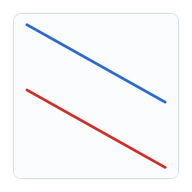
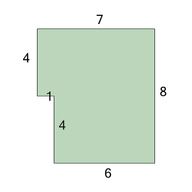



Emphasizes properties and relations of points, lines, surfaces, and solids, explores geometric proofs, and introduces basic trigonometry. Covers congruence, similarity, transformations, and the relationships between geometric shapes to develop spatial reasoning and logical thinking.
15 groups- See 8 Skills
Students calculate Euclidean distances between points and determine midpoints or missing endpoints of line segments using coordinate formulas, including integer, decimal, fractional, and radical values. They use slopes to identify parallel and perpendicular lines and write equations of lines through specified points, including horizontal and vertical cases. They apply coordinates, distance, midpoint, slope, and line equations to solve linear geometric problems involving collinearity, intersections, equal lengths, coordinate proofs, and classifications of triangles and quadrilaterals.
- See 8 Skills
Students classify variables as categorical, discrete numerical, or continuous numerical, calculate mean, median, mode, range, and interquartile range from raw data or simple frequency tables, and construct and interpret box plots using five-number summaries to compare centre, spread, skewness, and possible outliers. They construct and interpret histograms with appropriately scaled contiguous intervals, describe distributions by centre, spread, clusters, gaps, skewness, and possible outliers, and use scatterplots and lines of best fit to describe linear correlation and make cautious predictions, distinguishing association from causation and interpolation from extrapolation. They evaluate random, stratified, systematic, convenience, and voluntary-response sampling for undercoverage, nonresponse, self-selection, and other bias, distinguishing systematic bias from random sampling variation when generalizing from samples to populations.
- See 8 Skills
Apply the product, quotient, power-of-a-power, power-of-a-product, and power-of-a-quotient rules to simplify numerical and algebraic expressions with integer exponents, including expressions in scientific notation. Interpret zero exponents as 1 for nonzero bases and negative integer exponents as reciprocals, while preserving restrictions such as nonzero denominators and excluding 00. Perform multiplication, division, addition, and subtraction in scientific notation by combining coefficients and powers of 10, using common powers when necessary, and renormalizing results to 1≤∣a∣<10.
- See 8 Skills
Students factor out the greatest common monomial factor from integer-coefficient binomials and trinomials and use grouping to reveal common binomial factors in standard low-degree polynomial expressions. They recognize and apply differences of squares, perfect-square trinomials, monic quadratic trinomials, and quadratic trinomials with non-unit integer leading coefficients, including appropriate sign choices. They select an efficient factoring strategy, factor expressions completely when possible, and verify equivalent factored forms by multiplication to support simplifying rational expressions and solving polynomial equations.
- See 6 Skills
Calculate gross and net income from wages, salaries, commissions, bonuses, and fixed or percentage deductions, and create personal budgets by organizing income, fixed and variable expenses, savings, and discretionary spending across weekly, monthly, or annual periods. Calculate and interpret single percent increases and decreases, simple interest using I=Prt, and compound interest using A=P(1+r)n for whole-number periods, distinguishing simple from exponential growth and excluding successive changes, fractional periods, and advanced tax or investment models. Compare borrowing, saving, purchasing, and basic investment options by evaluating rates, fees, compounding periods, payment schedules, total costs, net gains, cost per unit, and effective rates using proportional reasoning, tables, graphs, and formulas.
- See 7 Skills
Apply angle relationships for parallel lines cut by a transversal, including corresponding and alternate angles, vertical angles, linear pairs, and same-side interior angles, to find unknown measures, solve simple equations, and justify parallelism; determine polygon interior and exterior angles using (n−2)180∘, supplementary adjacent angles, and a 360∘ exterior-angle sum for convex polygons. Identify congruent triangles using rigid motions and SSS, SAS, ASA, or AAS while rejecting SSA as sufficient, and identify similar triangles and figures using corresponding angles, proportional sides, and AA, SAS, or SSS, including rotated and reflected configurations. Use matching correspondence, scale factors, proportions, and consistent units to determine missing lengths in similar figures and triangles, solve straightforward indirect-measurement problems, and distinguish linear scale factors from additive changes.
- See 8 Skills
Students solve one-variable linear equations with integer, decimal, and fractional coefficients by distributing, combining like terms, and applying inverse operations, including equations with variables on both sides. They distinguish one solution, no solution from contradictions such as 0=5, and infinitely many solutions from identities such as 0=0, while rearranging linear formulas to isolate a variable and solving one-variable linear inequalities, reversing the inequality when multiplying or dividing by a negative and representing solution sets on number lines or in interval notation. They model contextual relationships with linear equations and inequalities, preserving units and domain restrictions and interpreting solutions as exact values, bounds, or feasible ranges.
- See 6 Skills
Students represent nonvertical linear relationships in equations, tables, graphs, and verbal descriptions, identifying slope as the constant rate of change and the y-intercept as the initial value. They determine slope from graphs, tables, or two points, interpret its sign, magnitude, and units, and write or graph equations in the form y=mx+b. They compare linear functions across representations by analyzing rates of change, initial values, outputs at given inputs, and intersections, recognizing that lines may change which function is greater after crossing.
- See 6 Skills
Students calculate the surface areas of right prisms, closed cylinders, regular pyramids, and right circular cones using SA=2B+Ph, SA=2πr2+2πrh, SA=B+21Pl, and SA=πr(r+ℓ), distinguishing base, lateral, slant, and perpendicular heights and reporting square units. Students calculate volumes of prisms, cylinders, pyramids, and cones using V=Bh and V=31Bh, including V=πr2h and V=31πr2h, and determine how a scale factor k changes lengths, areas, and volumes by k, k2, and k3, respectively. Students solve problems involving composite solids by decomposing figures into familiar solids, combining volumes and exposed surface areas while excluding shared internal faces, using consistent units and exact or appropriately rounded results.
- See 7 Skills
Classify nonzero one-variable polynomials by degree and number of terms, and identify their degree and leading coefficient, including constants, missing powers, and negative or fractional coefficients. Evaluate one- or multivariable polynomial expressions for specified real values, and add or subtract polynomials by managing signs, distributing negatives, and combining like terms in standard form. Multiply monomials by polynomials and one-variable binomials using the distributive property and exponent laws, and expand the special products for binomial squares and conjugates.
- See 7 Skills
Represent finite sample spaces for simple and two-stage experiments using exhaustive, non-overlapping organized lists, tables, and tree diagrams, identifying ordered outcomes and complete paths without omissions or repetitions. Calculate theoretical and experimental probabilities as fractions, decimals, or percentages, use complements with P(Ac)=1−P(A), and interpret experimental results as estimates that generally stabilize with more trials while distinguishing them from theoretical values. Determine probabilities of compound events by adding mutually exclusive or appropriately adjusting overlapping cases and multiplying probabilities for independent events, using sample-space representations to avoid double-counting and excluding continuous models, advanced counting, formal inference, and complex conditional-probability theory.
- See 6 Skills
Students recognize quadratic relations from equations in standard, factored, or vertex form, from vertical-parabola graphs, and from tables with equally spaced inputs and constant nonzero second differences, and graph them by plotting ordered pairs and connecting the pattern with a smooth curve. They identify the vertex, axis of symmetry, direction of opening, y-intercept, and real zeros, including two distinct zeros, one repeated zero, or no real zeros, from graphs or equations. They solve accessible quadratic equations with integer coefficients by factoring and applying the zero-product property, including repeated factors, without using the quadratic formula or complex solutions.
- See 8 Skills
Students classify real numbers as natural, whole, integer, rational, or irrational, distinguish rational and irrational values, and represent, compare, and order positive and negative numbers, zero, fractions, decimals, and radicals on a number line. They evaluate square roots of nonnegative perfect squares, simplify square roots by extracting perfect-square factors, and estimate irrational square roots between rational benchmarks to the tenths or hundredths. They add and subtract like square radicals after simplifying them, combining coefficients while recognizing that unlike radicals cannot be combined.
- See 8 Skills
Identify the hypotenuse, opposite side, and adjacent side relative to an acute angle in a right triangle, and determine sine, cosine, and tangent ratios using the appropriate side relationships. Select and apply a trigonometric ratio to find unknown side lengths or use inverse trigonometric functions to find acute angles, interpreting calculator results in degrees and rounding appropriately. Model and solve contextual problems involving right triangles, including height, distance, and angle situations, using trigonometry or the Pythagorean theorem and checking the reasonableness of results.
- See 7 Skills
Students model contextual situations with systems of two linear equations, defining variables and interpreting coefficients, constants, units, and constraints. They determine whether an ordered pair satisfies both equations and solve systems efficiently by substitution, elimination, or graphing, verifying solutions in the original equations. They identify and interpret one solution, no solution, or infinitely many solutions as intersecting, parallel, or coincident lines, including feasible values and reasonable graph-based approximations in context.
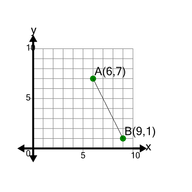
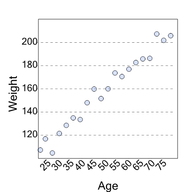



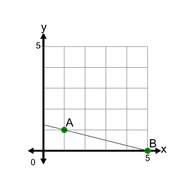
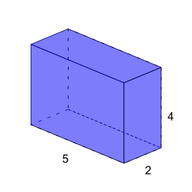



Builds on grades 9 and 10, covering complex numbers, advanced polynomials, exponential and logarithmic functions, and sequences and series. Introduces conic sections, matrices, and advanced equation solving techniques to prepare students for higher-level mathematics.
12 groups- See 10 Skills
Determine slopes from points and graphs, recognizing positive, negative, zero, and undefined slopes, and write equations of lines in slope-intercept, point-slope, or standard form, including horizontal and vertical lines and parallel or perpendicular relationships. Use the distance and midpoint formulas for points in the two-dimensional Cartesian plane, and determine or interpret circle equations in standard form using their centres and positive radii. Solve coordinate geometry problems involving lines and circles by applying slope, distance, midpoint, substitution, and elimination to find unknown coordinates, intersections, parallel or perpendicular relationships, tangency, and zero, one, or two intersection points.
- See 10 Skills
Classify data as categorical or quantitative and as discrete or continuous, evaluate sampling methods for undercoverage, convenience or voluntary response, and nonresponse bias, and recognize that random sampling reduces selection bias without eliminating sampling variability. Calculate and interpret the mean, median, mode, range, interquartile range, variance, and standard deviation for lists or frequency tables, and construct and interpret histograms and box plots using distribution, center, spread, skewness, and possible outliers. Construct and interpret scatter plots, describe the direction and strength of linear or nonlinear association while distinguishing correlation from causation, and use lines of best fit to make and evaluate interpolated or extrapolated predictions.
- See 5 Skills
Students distinguish linear additive change from exponential multiplicative change by using differences, ratios, tables, equations, graphs, and comparisons of initial values and long-term behavior. They determine initial values and growth or decay factors, evaluate functions of the form f(x)=abx, recognize growth and decay, write models from contexts and equally spaced tables, and interpret basic graphs, transformations, intercepts, domain, range, end behavior, and horizontal asymptotes. They solve simple exponential equations by rewriting both sides with a common positive base and equating exponents, without using logarithmic methods, regression, continuous compounding, or generalized exponential models.
- See 7 Skills
Students calculate simple and compound interest, accumulated amounts, future values, and present values using consistent rates, compounding frequencies, and time periods, and compare nominal and effective annual rates. They model regular deposits as annuities and calculate fixed-rate loan payments, amortization, total repayment, and total interest, distinguishing interest from principal as balances change. They compare investment and financing options using formulas, tables, graphs, fees, terms, payment schedules, inflation effects, and total costs within standard fixed-rate models.
- See 8 Skills
Students distinguish relations from functions using mappings, tables, equations, graphs, and the vertical line test, and evaluate standard algebraic functions using function notation while respecting domain restrictions. They determine domains from equations, ranges from graphs, zeros, positive and negative intervals, and increasing, decreasing, or constant intervals, accounting for endpoints, holes, turning points, zeros, and undefined inputs. They interpret domain, range, intercepts, extrema, symmetry, discontinuities, end behavior, and other key graph features in mathematical and real-world contexts, including appropriate units and restrictions such as nonnegative time or whole-number quantities.
- See 10 Skills
Students convert between exponential and logarithmic forms, interpret logarithms as exponents, and evaluate logarithms with exact integer values, including values involving 1 and negative integer exponents. Students apply the product, quotient, and power laws to expand and condense real logarithmic expressions with positive arguments, using familiar integer and rational powers while recognizing that logarithms do not distribute over sums or differences. Students solve simple logarithmic equations and exponential equations by using inverse relationships and logarithm properties, checking that bases are positive and not 1, all arguments are positive, and solutions satisfy the original equations.
- See 10 Skills
Students add, subtract, multiply, and evaluate one-variable polynomial functions with numerical coefficients, classify them by degree from 0 through 5, and identify their standard-form leading coefficients. They factor polynomial expressions completely over the specified number system and use factored form and the zero-product property to solve polynomial equations, determine real zeros and x-intercepts, and recognize repeated zeros and their multiplicities. Students predict end behavior from degree and leading coefficient and sketch polynomial graphs by combining end behavior with zeros and multiplicity-based crossing or touching behavior.
- See 7 Skills
Students simplify rational expressions by factoring polynomials, preserving denominator restrictions, and multiplying or dividing by canceling common factors rather than individual terms. They add and subtract rational expressions by finding a least common denominator, combining numerators correctly, and working with linear or common quadratic factors. They determine valid domains, solve simple rational equations by clearing denominators, reject extraneous solutions through checks in the original equation, and interpret rational expressions as rates, proportions, or relationships in context.
- See 9 Skills
Recognize arithmetic and geometric sequences from lists, tables, graphs, recursive rules, or explicit forms, distinguishing constant additive differences from constant multiplicative ratios. Determine common differences and ratios, find terms, and write explicit formulas using an=a1+(n−1)d and an=a1rn−1, including positive, negative, fractional, zero, and alternating patterns where applicable. Calculate finite arithmetic sums with Sn=2n(a1+an)=2n[2a1+(n−1)d] and finite geometric sums with Sn=1−ra(1−rn) for r=1 or Sn=na for r=1, excluding infinite-series convergence and complex or advanced generalized cases.
- See 7 Skills
Solve one-variable linear and compound inequalities using equivalent operations, reversing the inequality when multiplying or dividing by a negative, and represent solutions with number lines, intervals, or set notation. Solve two-variable systems of linear equations algebraically and graphically, including systems with unique, no, or infinitely many solutions, and solve linear–quadratic systems by substitution or graphing to identify zero, one, or two real intersection points. Graph linear inequalities and systems as half-planes with correctly included or excluded boundaries, interpret their intersections as feasible regions and solution sets, and use ordered pairs, units, and relevant corner points to assess feasible choices.
- See 10 Skills
Students identify horizontal and vertical translations, stretches and compressions, and reflections across the x- and y-axes, interpreting their effects on equations, graphs, domains, ranges, intercepts, and key points. Students graph and describe combined transformations of familiar parent functions, including linear, quadratic, absolute-value, square-root, and reciprocal functions, using g(x)=af(b(x−h))+k and the mapping (x,y)↦(bx+h,ay+k), with attention to the reciprocal effect of horizontal factors. Students determine transformed equations from graphs by inferring parameters from vertices, intercepts, endpoints, asymptotes, and corresponding points, and connect equations, mappings, tables, and graphical features.
- See 10 Skills
Convert between degree and radian measures using 180∘=π, identify coterminal and reference angles in standard position, and use the unit circle, quadrant signs, and special angles 0∘,30∘,45∘,60∘, and 90∘ to determine exact sine, cosine, and tangent values. Graph and interpret transformed sine and cosine functions, determining amplitude, period, phase shift, vertical displacement, midline, range, key points, zeros, maxima, minima, reflections, and periodic extensions from equations in degrees or radians. Model real-world periodic phenomena with y=Asin(B(x−C))+D or y=Acos(B(x−C))+D, relating parameters to measurable amplitude, period, phase shift, midline, units, and values while distinguishing periodic behavior from linear change.
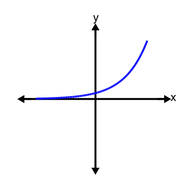
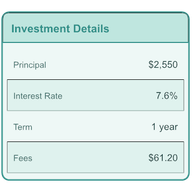
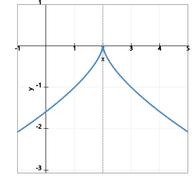

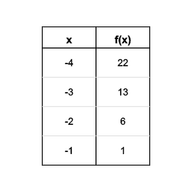



Prepares students for university-level calculus by covering advanced functions, trigonometry, limits, and introductory differential calculus. Emphasizes mathematical modeling, problem-solving, and analytical thinking to ensure readiness for higher education and STEM careers.
15 groups- See 6 Skills
Use first- and second-derivative sign analysis to find critical numbers, determine intervals of increase and decrease, classify local extrema, and identify concavity and points of inflection. Use derivative information to write tangent and normal line equations and sketch standard polynomial, rational, exponential, logarithmic, and trigonometric curves using intercepts, domain restrictions, end behavior, and asymptotes where appropriate. Model and solve single-variable optimization and related-rates problems by applying derivative tests, endpoint analysis, implicit differentiation, constraints, feasible domains, units, and contextual interpretation.
- See 10 Skills
Systematically count finite outcomes using organized lists, tables, and tree diagrams, applying the fundamental counting principle, addition and multiplication principles, permutations with or without repetition, and combinations while distinguishing ordered arrangements from unordered selections. Apply the binomial theorem for nonnegative integer powers, expanding (a+b)n, identifying terms and coefficients, and interpreting binomial coefficients as combination counts. Calculate probabilities in equally likely finite sample spaces using counting techniques, conditional probabilities, and complementary events, and determine whether events are independent or mutually exclusive using multiplication and conditional-probability rules.
- See 9 Skills
Students determine derivatives from first principles using the difference quotient and apply linearity, power, trigonometric, exponential, and logarithmic differentiation rules to familiar functions, including appropriate domains and radians for trigonometric functions. They differentiate products, quotients, and composite functions using the product, quotient, and chain rules, including standard algebraic, trigonometric, exponential, and logarithmic combinations. They compute second, third, and higher-order derivatives when patterns are clear, interpreting the second derivative through concavity and acceleration while excluding multivariable, inverse, hyperbolic, variable-base, and advanced generalized differentiation.
- See 8 Skills
Apply exponent and logarithm laws to simplify, expand, and condense expressions, including zero, negative, and rational exponents where defined, and convert accurately between exponential and logarithmic forms while respecting domain restrictions. Graph and interpret transformed exponential and logarithmic functions, identifying growth or decay, asymptotes, domain, range, intercepts, transformations, and parameters in models such as y=abx, y=Aekx, and y=a+blogc(x−h). Model exponential growth and decay and solve exponential equations using common bases or logarithms, as well as logarithmic equations, verifying solutions and rejecting those that violate positivity or introduce extraneous values.
- See 5 Skills
Apply compound-interest models with varied compounding periods, convert among periodic, nominal, and effective annual rates, and determine present and future values for lump sums and regular payment streams. Calculate ordinary and due annuities, model regular deposits, determine fixed loan and mortgage payments, and create amortization schedules showing interest, principal reduction, remaining balances, total repayment, and total interest. Compare investment and borrowing options and evaluate long-term financial plans by aligning rates, cash-flow timing, fees, inflation, taxes, and time horizons using present value, future value, effective rates, and total costs.
- See 8 Skills
Determine the real domain and range of functions, zeros and x- and y-intercepts, intervals of positivity and negativity, vertical and horizontal asymptotes, and end behavior for common polynomial, rational, exponential, and logarithmic functions. Interpret graphs, tables, formulas, and first-derivative information to identify intervals of increase and decrease, local and absolute extrema, intervals of concavity, and points of inflection over the stated domain. Sketch coherent function graphs by integrating these characteristics, including symmetry, discontinuities, periodicity where applicable, and qualitative behavior while distinguishing exact features from approximations.
- See 9 Skills
Students describe, represent, and graph reflections across the coordinate axes, vertical and horizontal stretches or compressions, and translations using g(x)=af(b(x−h))+k, interpreting changes to key points, domain, range, and other features across equations, graphs, tables, and verbal descriptions. They form, evaluate, and interpret composite functions from equations, tables, graphs, and transformation rules, recognizing that order matters and determining composite domains by enforcing restrictions on both successive evaluations. They determine and verify inverse functions for one-to-one real-valued functions by interchanging inputs and outputs, applying necessary domain restrictions, using composition to check results, and relating inverse graphs through reflection across y=x rather than reciprocal operations.
- See 9 Skills
Represent lines in two- and three-dimensional coordinate geometry using vector, parametric, and symmetric equations, and represent planes in scalar form ax+by+cz=d using normal vectors obtained from coefficients or cross products. Determine intersections by solving linear systems, including the point of intersection or parallel/coincident cases for two-dimensional lines, and intersecting, parallel, coincident, or skew relationships among three-dimensional lines and planes, with plane intersections expressed parametrically when appropriate. Calculate point-to-point, point-to-line, point-to-plane, and parallel-line or parallel-plane distances as minimum Euclidean lengths, identifying zero distance for intersecting objects and common perpendiculars for parallel or skew objects.
- See 35 Skills
Construct and interpret matrices from data, identify their dimensions, rows, columns, and elements, test matrix equality and multiplication compatibility, and perform addition, subtraction, scalar multiplication, and transposition using their properties. Multiply matrices and vectors, determine product dimensions, apply multiplication properties and the identity matrix, and use matrices to model, combine, and interpret transformations and systems of linear equations. Calculate 2-by-2 and 3-by-3 determinants using minors and cofactors, determine invertibility, find and verify inverses using the adjugate, and solve matrix equations and linear systems with inverse matrices.
- See 7 Skills
Students factor higher-degree real-coefficient polynomials using common factors, grouping, identities, substitution, the Rational Root Theorem, the Factor Theorem, and polynomial division, and solve equations for real and nonreal complex roots, including repeated roots and multiplicities. They perform long division and synthetic division by linear divisors, using placeholders for missing powers, and apply the Remainder Theorem to evaluate polynomials and connect remainders, factors, and zeros. They determine rational-function restrictions, holes, vertical, horizontal, and slant asymptotes, solve rational equations and inequalities through domain and sign analysis, and sketch polynomial functions using zeros, multiplicities, degree, leading coefficient, intercepts, and end behavior.
- See 5 Skills
Define discrete random variables and construct or verify valid probability distributions by listing possible values and assigning nonnegative probabilities that sum to 1. Calculate and interpret expected value, variance, and standard deviation for finite discrete distributions, including their meanings, units, and implications for typical outcomes and variability. Model repeated independent trials with binomial distributions, calculate exact and range probabilities, and use distributions and summary measures to compare risks, costs, payoffs, and fairness.
- See 9 Skills
Calculate and interpret average rates of change as secant slopes, and estimate instantaneous rates of change numerically and graphically as tangent slopes with appropriate signs and units. Evaluate finite and infinite one-sided and two-sided limits from graphs, tables, and algebraic expressions using substitution, factoring, canceling, or rationalizing, distinguishing limiting behavior from the value at the point. Identify removable, jump, and infinite discontinuities and relate the limit of difference quotients to instantaneous rate of change and the derivative when it exists, without formal ε-δ proofs or advanced generalizations.
- See 9 Skills
Use normal distributions to calculate and interpret probabilities, percentiles, and z-scores, compare relative positions across distributions, and recognize that probabilities represent areas under a continuous curve. Construct and interpret single-predictor linear regression models using slope, intercept, residuals, and R2, and interpret correlation coefficients in context while distinguishing association from causation. Evaluate sampling methods, sources of bias, confidence intervals, margins of error, significance, variability, and statistical claims, distinguishing statistical significance from practical importance and recognizing the limits of generalization.
- See 9 Skills
Use the unit circle to determine exact trigonometric values at quadrantal angles and angles with reference angles π/6, π/4, and π/3, apply reciprocal, quotient, Pythagorean, and compound-angle identities, and verify identities while respecting signs, domains, and undefined values. Transform and graph sine, cosine, and tangent functions, interpreting amplitude, period, phase shift, vertical displacement, midline, asymptotes, key features, and standard real-valued models of periodic phenomena. Solve trigonometric equations over specified degree or radian intervals using algebraic manipulation, identities, factoring, substitution, periodicity, quadrant relationships, inverse-trigonometric values, and verification of all solutions.
- See 7 Skills
Students represent vectors geometrically and in Cartesian components in two dimensions, and in three dimensions where appropriate, determining their magnitude, direction, and unit vector and multiplying them by real scalars. They add and subtract vectors, resolve them into perpendicular components, and use the dot product to determine alignment, perpendicularity, and the angle between nonzero vectors. They apply these skills to two-dimensional force, displacement, velocity, and acceleration problems, interpreting resultant vectors and recognizing equilibrium when the net force is zero.